Do I Need Extra Counterweight
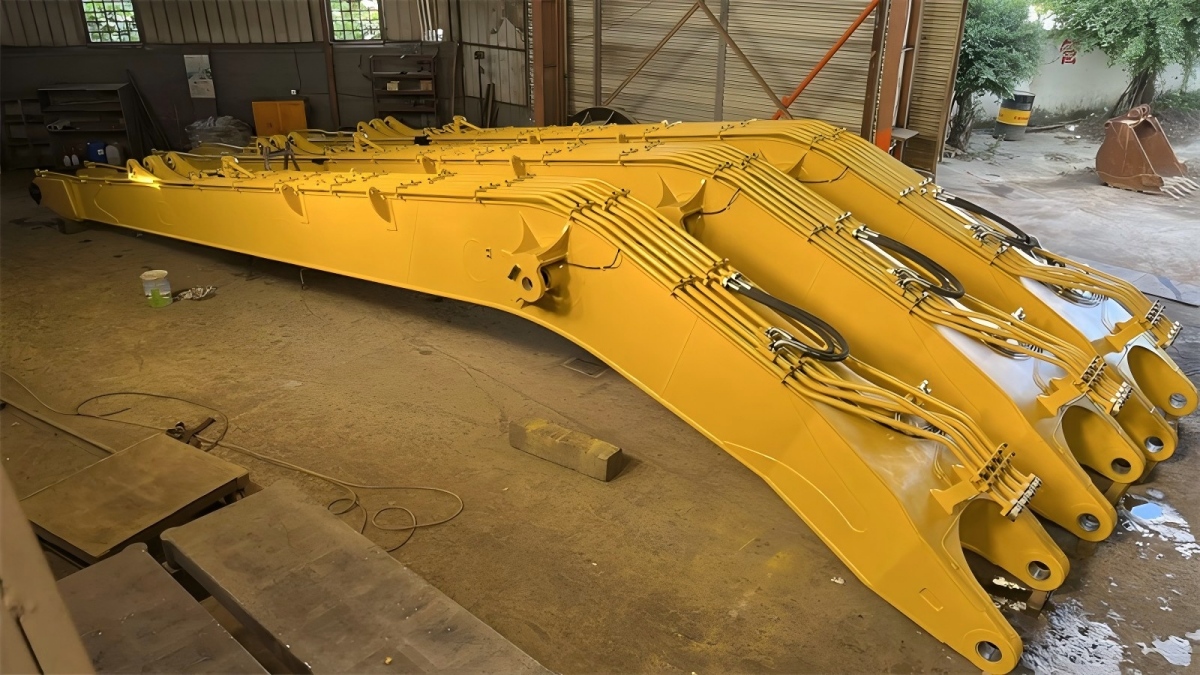
Below is a detailed explanation of why counterweights matter, what happens when they are missing, and how to decide how much is required. A real-world example based on a CAT 312 (12-ton class) excavator with 10 m, 11 m, 12 m, and 13 m long reach booms is also included.
Why Long Reach Arms Require Proper Counterweight
Extended radius increases tipping risk
A long reach arm places the attachment weight much farther forward. Even if the attachment weight does not change, the moment force increases dramatically. This is the primary reason an excavator counterweight becomes essential. As the working radius increases, the leverage effect increases proportionally, pulling the excavator forward with every bucketful of material.
Reduced lifting capacity at full reach
Manufacturers design standard counterweights for the typical working radius of a standard boom and stick. When a machine is fitted with a long arm—10 m or more—its rated lifting capacity drops sharply. Without additional counterweights, the machine becomes unstable even when handling light materials such as sand or silt.
Increased stress on swing frame and undercarriage
When the machine is nose-heavy, the center of gravity shifts forward, placing abnormal pressure on the swing bearing, the carbody, and the track frame. Over time, this leads to accelerated wear or structural damage. A properly calculated excavator counterweight restores balance and reduces long-term stress.
What Happens If You Don’t Add Extra Counterweight?
1. Forward tipping during operation
Even slight over-rotation or reaching beyond the safe arc can cause the excavator to lift its rear track pads off the ground. On soft soil, the machine may sink forward. On firm ground, the forward rocking becomes dangerous and can lead to a complete tip-over.
2. Poor swing stability
When the excavator is front-heavy, the upper structure may swing unevenly. The operator will feel a delayed response when swinging right or left, especially when stopping the movement. This reduces precision and slows work significantly.
3. Faster wear on hydraulic components
A machine struggling against imbalance forces the hydraulic system to work harder to keep the boom stable. Over thousands of cycles, this can lead to premature failure of boom cylinders, the swing motor, and even the main pump.
4. Restricted working angle
Without adequate counterweights, operators must avoid working directly forward at maximum reach. This reduces the efficiency advantage of a long reach arm and forces the operator to reposition the tracks frequently.
For these reasons, any excavator equipped with a long reach boom—especially one over 11 m—should be evaluated for an appropriate excavator counterweight package.
How to Determine the Proper Counterweight
Consider these three main factors:
1. Boom and stick length
Longer arms require more counterweights. Each additional meter increases the forward moment significantly. A 10 m arm may need only a moderate increase, while a 13 m arm often requires a substantial addition.
2. Bucket size and application
A lightweight long-reach bucket used for dredging or slope finishing may require less adjustment. A heavy-duty bucket, clamshell, or hydraulic attachment increases the demand for a heavier excavator counterweight.
3. Material density
Working with sand, silt, or sludge requires minimal lifting force. Handling rocks, clay, or demolition debris requires more balance, thus heavier counterweights.
Example: Counterweight Recommendations for a CAT 312 with Long Reach Booms
A CAT 312 weighs around 12 tons in standard configuration. The factory counterweight is designed for a standard boom of roughly 5.6 m and a stick of around 2.9 m. Once a long reach package is installed, the center of gravity changes dramatically.
Below is a realistic guideline based on field experience with long reach configurations on similar 12-ton excavators.
10m Long Reach Boom Setup
Recommended Counterweight
For a 10 m boom, the excavator can remain relatively stable with a moderate counterweight addition.
Additional counterweight: 600–800 kg
Suitable for: river cleaning, light dredging, slope shaping
Bucket size: 0.2–0.25 m³ long-reach bucket
Stability rating: acceptable for full forward reach on firm ground
This configuration keeps the machine stable for light materials. The excavator counterweight does not need to be extreme because the working radius is still manageable.
11m Long Reach Boom Setup
Recommended Counterweight
An 11 m configuration pushes the center of gravity further, so a heavier rear ballast becomes necessary.
Additional counterweight: 900–1100 kg
Suitable for: light dredging, municipal canal work
Bucket size: 0.2 m³
Stability rating: safe with smooth operations and controlled swing
At this length, skipping additional counterweights would significantly increase forward tipping risk, especially when the bucket breaks out dense clay.
12m Long Reach Boom Setup
Recommended Counterweight
A 12m long arm is considered substantial for a 12-ton excavator. The machine requires a properly engineered counterweight kit.
Additional counterweight: 1300–1500 kg
Suitable for: lake dredging, deep trench work, general long-reach tasks
Bucket size: 0.15–0.2 m³
Stability rating: good if the counterweight is securely mounted
Without this level of excavator counterweight, operators will notice the rear track lifting even when handling minimal load.
13m Long Reach Boom Setup
This is the longest reach typically used on a 12-ton machine. A popular configuration in this category is the 13m Long Reach Boom for CAT 312 Excavator, commonly used for deep-water dredging and long-distance bank shaping.
Recommended Counterweight
Additional counterweight: 1600–2000 kg
Suitable for: deep dredging, long-distance riverbank work, large ponds
Bucket size: 0.1–0.15 m³
Stability rating: stable only with properly installed heavy counterweights
At 13 m, the excavator becomes extremely sensitive to imbalance. Without the correct excavator counterweight, the rear of the machine will float during nearly every forward motion, making it unsafe for commercial work.
This configuration should never be operated without a professionally designed counterweight system.
Safe Installation and Testing
Static Stability Test
After installing counterweights, conduct a static test with the boom fully extended forward and fully retracted. The rear track should remain firmly on the ground with no rocking.
Swing Test
Swing the boom slowly from left to right at full reach. If the excavator counterweight provides proper balance, the machine should not sway, and the swing motor should not strain.
Worksite Simulation
Test with a half-full bucket first, then gradually increase to full load. Observe for any lifting of the rear tracks.
When to Consult a Professional
Any time the boom length reaches 11–13 m, the safest approach is to request a detailed calculation from a supplier experienced in long reach packages. Incorrect counterweights may cause structural damage or unsafe operation.
If you need a customized counterweight solution for any long reach configuration or wish to check whether your current setup is safe, feel free to contact us.
Are New Excavator Attachments Better Than Used Ones