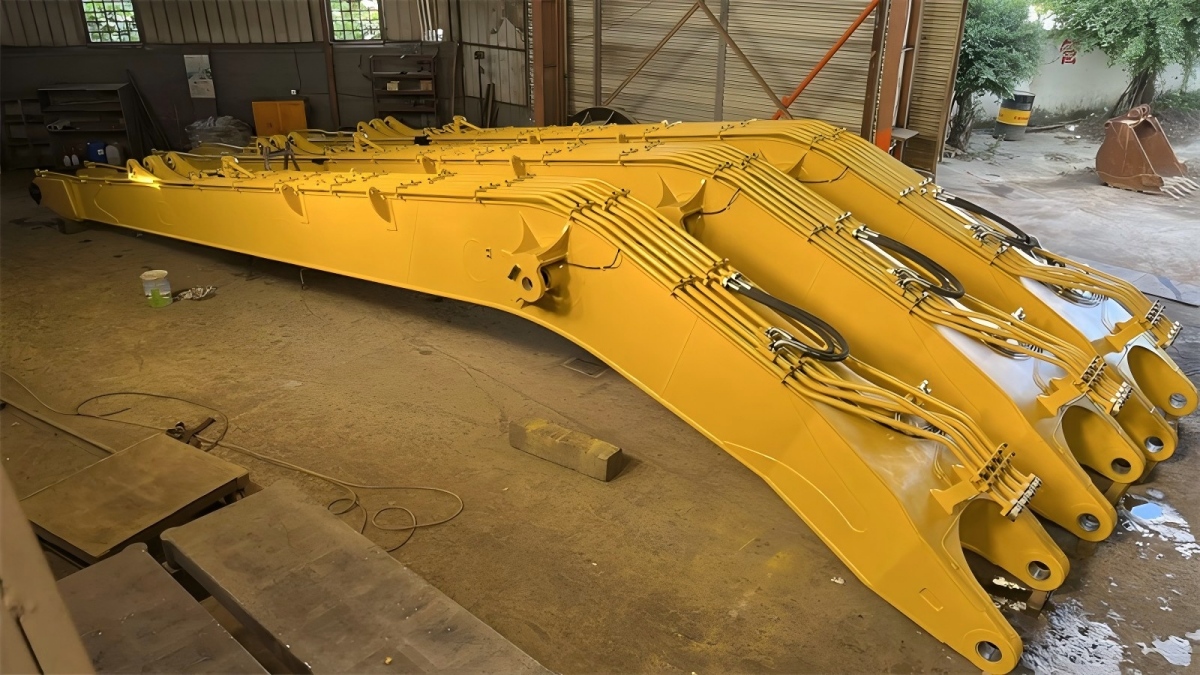
How to install long reach excavator booms ?

Are you still worrying about how to install your excavator extension arm, contact Dewanda to solve it directly
for you or continue to browse the following steps to guide you how to properly install the extension arm.
The installation of long reach excavator booms is a critical process that requires meticulous planning, technical
expertise, and strict adherence to safety protocols. These specialized attachments are designed to extend the
working range of standard excavators, enabling tasks such as deep excavation, dredging, or material handling
in hard-to-reach areas. However, improper installation of long reach excavator booms can lead to equipment
failure, safety hazards, or reduced operational efficiency. This guide provides a detailed, step-by-step breakdown
of the installation process, emphasizing the unique requirements of long reach excavator booms while ensuring
compliance with industry standards.
1. Pre-Installation Preparation
1.1 Safety Precautions
Before handling long reach excavator booms, prioritize safety:
Power Down the Excavator: Turn off the engine, remove the ignition key, and disconnect the battery to
eliminate electrical hazards.
Depressurize Hydraulic Systems: Activate all hydraulic controls (e.g., boom, arm, bucket) to release
residual pressure in the lines. This prevents accidental movement or oil spills during installation.
Personal Protective Equipment (PPE): Equip the crew with safety helmets, gloves, steel-toe boots,
and eye protection.
1.2 Tool and Equipment Readiness
Installation of long reach excavator booms demands specialized tools:
Lifting Machinery: Use a crane or forklift with adequate load capacity to handle the weight of long reach
excavator booms (verify specifications from the manufacturer).
Mechanical Tools: High-torque wrenches, hydraulic pin pullers, drift punches, and lubrication grease.
Hydraulic Components: Seal kits, hydraulic oil, and port plugs to prevent contamination.
1.3 Site Preparation
Flat and Stable Ground: Ensure the installation area is free of slopes, debris, or soft soil. Use stabilizing
plates under the excavator and crane if necessary.
Clear Workspace: Remove obstacles to allow safe movement of the crane and long reach excavator booms.
1.4 Component Inspection
Thoroughly inspect long reach excavator booms and related parts:
Structural Integrity: Check for cracks, bends, or weld defects in the boom and arm sections.
Hydraulic Compatibility: Verify that the excavator’s hydraulic flow rate and pressure match the requirements
of the long reach excavator booms.
Pin and Bushing Condition: Ensure all pins, bushings, and retainers are undamaged and properly lubricated.
2. Removal of the Standard Boom
2.1 Detach the Bucket or Attachment
Remove the bucket by extracting the pivot pins connecting it to the stick. Store pins and retainers for reuse.
2.2 Disconnect Hydraulic Lines
Label hydraulic hoses (e.g., “Boom Cylinder,” “Stick Cylinder”) to avoid reconnection errors.
Cap open ports immediately to prevent dirt ingress.
2.3 Dismantle the Existing Boom
Support the Boom: Use the crane to suspend the standard boom, relieving stress on the excavator’s pivot points.
Extract Pins: Remove the primary boom-to-swing frame pin and secondary linkage pins.
Apply penetrating oil if pins are seized, and use hydraulic pullers for stubborn connections.
Lower the Boom: Carefully lower the detached boom and relocate it to a storage area.
3. Installation of Long Reach Excavator Booms
3.1 Positioning the Long Reach Excavator Booms
Lifting and Alignment: Hoist the long reach excavator booms using the crane, aligning the mounting holes
with the excavator’s swing frame. Use guide rods or alignment tools to simplify pin insertion.
Install Primary Pins: Insert the main pivot pins and secure them with retainers (e.g., bolts or snap rings). Apply
anti-seize lubricant to prevent future corrosion.
3.2 Reconnecting Hydraulic Systems
Cylinder Installation: Attach the long reach excavator booms’ hydraulic cylinders to the excavator’s hydraulic
lines. Replace O-rings and ensure threads are clean to avoid leaks.
Pressure Testing: Temporarily power the hydraulic system to check for leaks. Resolve any issues before proceeding.
3.3 Attaching Secondary Components
Stick and Bucket Integration: Connect the extended stick and bucket (or other attachments) to the long reach
excavator booms. Verify that all pins rotate freely and are properly greased.
Safety Checks: Confirm that guardrails, warning labels, and anti-drop valves (if equipped) are installed.
4. Post-Installation Testing and Calibration
4.1 Functional Testing
Manual Movement: Operate the long reach excavator booms slowly through their full range of motion (extension,
retraction, lifting). Listen for unusual noises or jerky movements.
Hydraulic Pressure Verification: Use a pressure gauge to ensure the system meets the manufacturer’s specifications.
Adjust relief valves if necessary.
4.2 Load Testing
Gradual Loading: Begin with light loads (e.g., empty bucket) and incrementally increase to maximum capacity. Monitor
stability and hydraulic performance.
Balance Assessment: Long reach excavator booms shift the machine’s center of gravity. Test the excavator on inclines
or uneven terrain to evaluate tipping risks.
4.3 Operator Training
Familiarization: Train operators on the unique handling characteristics of long reach excavator booms, emphasizing
slower movements and reduced lifting capacities at full extension.
Emergency Protocols: Review procedures for hydraulic failures or instability scenarios.
5. Maintenance and Safety Considerations for Long Reach Excavator Booms
5.1 Routine Inspections
Daily Checks: Inspect pins, bushings, and hydraulic lines for wear or leaks.
Greasing Schedule: Lubricate all pivot points on the long reach excavator booms after every 8–10 hours of operation.
5.2 Structural Monitoring
Crack Detection: Use non-destructive testing (NDT) methods annually to identify stress fractures in high-load areas of
the long reach excavator booms.
Corrosion Prevention: Apply protective coatings to areas exposed to moisture or abrasive materials.
5.3 Operational Limitations
Avoid Overloading: Long reach excavator booms reduce the machine’s lifting capacity at full extension. Adhere to load
charts provided by the manufacturer.
Environmental Factors: Wind, uneven ground, or unstable loads amplify risks when using long reach excavator booms.
6. Troubleshooting Common Issues with Long Reach Excavator Booms
6.1 Hydraulic System Failures
Slow or Weak Movement: Check for clogged filters, low oil levels, or worn pump components.
Cylinder Drift: Inspect seals in the long reach excavator booms’ cylinders and replace if leaking.
6.2 Mechanical Wear
Excessive Play in Joints: Replace worn bushings or pins to prevent misalignment of the long reach excavator booms.
Bent Components: Avoid using damaged booms—contact the manufacturer for repairs.
7. Advantages of Long Reach Excavator Booms
Extended Reach: Ideal for deep trenching, riverbank work, or demolition tasks where standard booms cannot access.
Versatility: Compatible with various attachments (grapples, shears, etc.) for specialized applications.
Cost Efficiency: Reduces the need for additional equipment in large-scale projects.
Installing long reach excavator booms is a complex yet rewarding process that significantly enhances an excavator’s capabilities.
By following the steps outlined—preparation, component removal, precise installation of long reach excavator booms, thorough
testing, and ongoing maintenance—operators can ensure safe and efficient operation. Always prioritize manufacturer guidelines
and seek professional assistance for technical challenges. With proper care, long reach excavator booms will deliver long-term
performance, making them indispensable for demanding construction, mining, and environmental projects.
The above installation steps are for reference only. Through the above steps, the installation and commissioning of the long arm of
the excavator can be completed safely and efficiently. If special models or technical problems are involved, contact the Dewanda
manufacturer or Dewanda professional personnel.
Are Excavator Buckets Universal ?