How to maintain the long arm of an excavator?

If you don't want to browse such a complicated article, click here
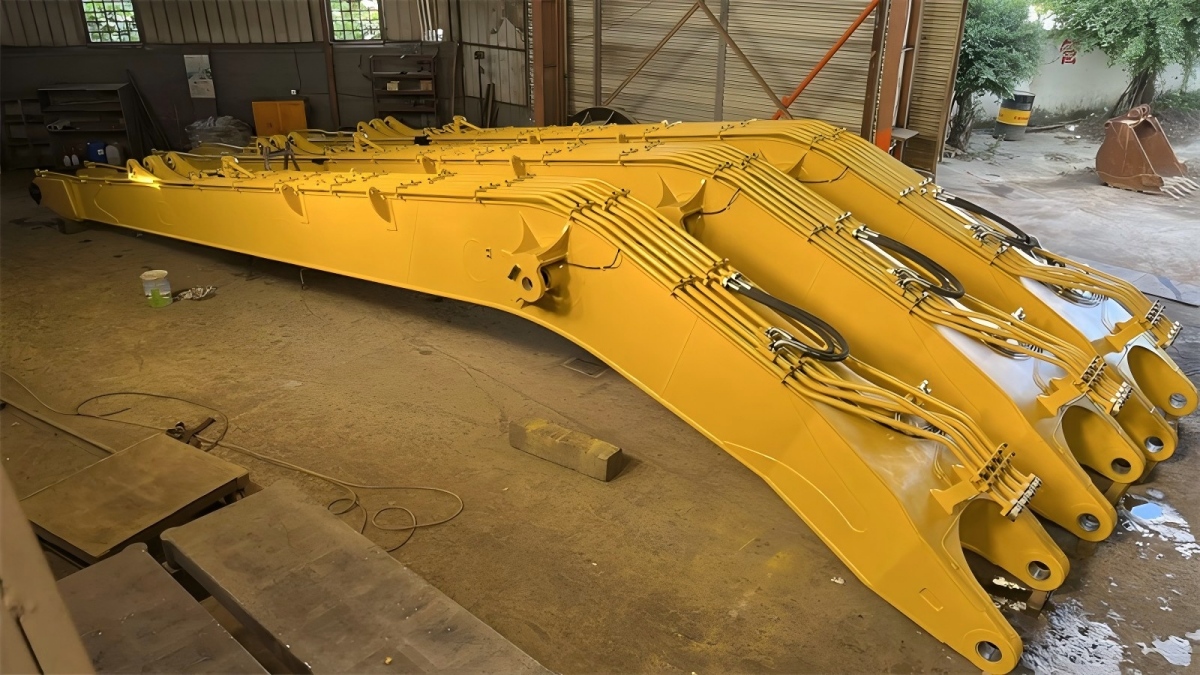
In the field of modern engineering construction, the long arm of an excavator, with its outstanding capacity to extend the working range, has emerged as an indispensable and crucial piece of equipment in diverse scenarios such as bridge construction, river channel dredging, and high - rise building construction. The long arm of an excavator, being a key component, is constantly in use and thus requires careful attention. Maintaining the long arm of an excavator properly is of utmost importance. However, the long arm of an excavator has a complex structure and has to operate in harsh environments. During daily use, the long arm of an excavator bears huge loads and stresses. If the long arm of an excavator is not properly maintained, it will not only reduce work efficiency but also may lead to safety accidents. Therefore, it is of vital importance to master scientific and systematic methods to maintain the long arm of an excavator. The following will provide you with a detailed analysis of the maintenance key points of the long arm of an excavator from multiple dimensions.
I. Daily Basic Maintenance: Prevent Problems at the Outset and Start from the Details
Meticulous Inspection before Operation
Cleaning and Lubrication after Operation
II. Regular In - depth Maintenance: Systematic Maintenance to Prolong Equipment Life
Monthly Maintenance: Double Guarantee for the Hydraulic System and Structural Components
A thorough inspection of the long arm of an excavator needs to be carried out once a month. In terms of the hydraulic system of the long arm of an excavator, in addition to the routine oil inspection, the hydraulic oil filter of the long arm of an excavator needs to be replaced to prevent the filter element from being blocked, which will lead to poor oil flow and affect the performance of the hydraulic pump and control valve of the long arm of an excavator. At the same time, observe the color and viscosity of the hydraulic oil of the long arm of an excavator. If the oil of the long arm of an excavator appears turbid, black, or emulsified, it indicates that the oil has been seriously contaminated, and all the hydraulic oil of the long arm of an excavator needs to be replaced immediately, and the inside of the oil tank of the long arm of an excavator should be cleaned.
For structural components of the long arm of an excavator, it is necessary to focus on checking the deformation of the arm body of the long arm of an excavator. Use a spirit level or a laser rangefinder to measure the straightness of the boom and the arm of the long arm of an excavator. If the deviation of the long arm of an excavator exceeds the design standard, it may affect the operation accuracy and even lead to structural fracture of the long arm of an excavator. In addition, conduct ultrasonic flaw detection on the welds of key parts of the long arm of an excavator, and even minor internal defects of the long arm of an excavator can be found in a timely manner to avoid the expansion of potential hazards.
Quarterly Maintenance: Comprehensive Overhaul of Core Components
The quarterly maintenance of the long arm of an excavator needs to focus on core components such as pins and bushings, and hydraulic cylinders of the long arm of an excavator. Pins and bushings are the parts where the long arm of an excavator moves frequently. After long - term use, it is easy for the long arm of an excavator to have the problem of increased wear clearance. By measuring the diameter of the pin and the inner diameter of the bushing of the long arm of an excavator, judge the degree of wear. If the clearance of the long arm of an excavator exceeds the allowable range of the design (generally 0.1 - 0.3mm), new parts must be replaced. Otherwise, it will cause the arm body of the long arm of an excavator to shake and the movement to be inaccurate.
The maintenance of the hydraulic cylinder of the long arm of an excavator is also crucial. Check whether there are scratches or rust on the inner wall of the cylinder barrel of the long arm of an excavator, whether the chrome plating layer on the surface of the piston rod of the long arm of an excavator is peeling off, and whether the seals of the long arm of an excavator are aging and damaged. If slight scratches are found on the long arm of an excavator, polishing and repair can be carried out; for serious damage of the long arm of an excavator, the cylinder barrel or piston rod needs to be replaced, and all the seals should be replaced at the same time to prevent hydraulic oil leakage of the long arm of an excavator.
Annual Maintenance: Comprehensive Upgrade of the Whole Machine Performance
An annual "comprehensive physical examination" needs to be carried out on the long arm of an excavator. First, carry out a comprehensive rust removal and anti - corrosion treatment on the arm body of the long arm of an excavator: grind off the surface rust layer of the long arm of an excavator, and spray epoxy zinc - rich primer and polyurethane topcoat to form a multi - layer protective barrier to prolong the service life of the metal of the long arm of an excavator. Second, carry out a thorough cleaning and oil change of the hydraulic system of the long arm of an excavator, including parts such as the oil tank, pipelines, and radiators of the long arm of an excavator, to remove the accumulated impurities and gums inside and ensure the cleanliness of the system of the long arm of an excavator.
In addition, it is recommended to contact a professional manufacturer to conduct a stress test on the long arm of an excavator. Through finite element analysis technology, evaluate the stress distribution of the arm body of the long arm of an excavator under different working conditions, find out the potential weak points of the long arm of an excavator, and carry out reinforcement or optimized design accordingly to maintain the long arm of an excavator.
III. Targeted Maintenance in Special Working Conditions and Idle Periods
Emergency Maintenance after Operation in Harsh Environments
After operating in harsh environments such as high temperature, high humidity, high dust, or strong corrosion, the maintenance of the long arm of an excavator needs to be "strengthened". For example, when constructing along the coast, the salt spray is likely to corrode the metal surface of the long arm of an excavator. After the operation, it is necessary to rinse the long arm of an excavator immediately with fresh water and apply anti - corrosion grease to the key parts of the long arm of an excavator. In a high - dust environment such as a mine, the radiator and the hydraulic oil cooler of the long arm of an excavator should be cleaned every day to prevent dust accumulation from affecting the heat dissipation effect and causing the oil temperature of the long arm of an excavator to be too high.
Sealing and Maintenance during the Idle Period
If the long arm of an excavator needs to be idle for a long time (more than 1 month), professional sealing is required. First, thoroughly clean the arm body of the long arm of an excavator and spray rust inhibitor. Second, release the pressure of the hydraulic system of the long arm of an excavator to zero to prevent the seals of the long arm of an excavator from deforming due to long - term pressure. Finally, cover the whole machine of the long arm of an excavator with a dust cover and store it in a dry and ventilated room to avoid direct sunlight and rain erosion. During the idle period, it is recommended to start the equipment of the long arm of an excavator once every half month and let the hydraulic system run for a short time to prevent the oil of the long arm of an excavator from solidifying and the components of the long arm of an excavator from rusting.
IV. Maintenance Misconceptions and Precautions
Common Misconceptions
Over - lubrication: Some operators think that the more lubricating grease, the better for the long arm of an excavator. In fact, excessive lubrication will lead to the accumulation of grease on the long arm of an excavator, which will adsorb dust and form abrasive particles, accelerating the wear of components of the long arm of an excavator.
Neglecting Minor Faults: Not paying attention to slight oil leakage, abnormal noises, or jerky movements of the long arm of an excavator may lead to the escalation of faults and increase the maintenance cost of the long arm of an excavator.
Mixing Hydraulic Oils: Hydraulic oils of different brands and models have different chemical compositions and additives. Mixing them for the long arm of an excavator may lead to a decrease in the performance of the oil and even produce precipitation in the long arm of an excavator.
Safety Tips
Maintenance operations on the long arm of an excavator must be carried out after the machine is shut down, the engine is turned off, and the hydraulic pressure is released. It is strictly prohibited to carry out maintenance when the equipment of the long arm of an excavator is running.
Use qualified tools and accessories for the long arm of an excavator to avoid safety hazards caused by inferior products for the long arm of an excavator.
Operators need to receive professional training and strictly follow the equipment instruction manual to maintain the long arm of an excavator. For complex problems of the long arm of an excavator, technical personnel of the manufacturer should be contacted for handling.
Scientific and standardized maintenance is the cornerstone of the efficient and safe operation of the long arm of an excavator. Through daily maintenance, regular inspections, and targeted treatments in special working conditions, not only can the service life of the long arm of an excavator be significantly prolonged, but also the failure rate of the long arm of an excavator can be reduced and the operation efficiency of the long arm of an excavator can be improved, providing a reliable guarantee for engineering construction. Only by integrating the maintenance awareness throughout the whole life cycle of the long arm of an excavator can we achieve a win - win situation between economic benefits and safety performance of the long arm of an excavator.
Contact us Dewanda for more information //www.dewandaparts.com/
How to determine if hydraulic oil viscosity is appropriate?
Daily maintenance long extened arm of excavator