How does a long stick excavator reach differ from a standard excavator arm?

In the dynamic world of construction and heavy machinery, understanding the nuances between different types of excavator arms is essential for maximizing efficiency and productivity. Two prominent types of excavator arms that often come into focus are the long stick excavator reach and the standard excavator arm. Each has its unique set of features, advantages, and applications, making them suitable for different tasks. This article aims to delve into the differences between these two types of excavator arms, providing clarity for those looking to make informed decisions.
Basic Design and Structure
The standard excavator arm is designed for general-purpose excavation tasks. It consists of a boom and an arm, with a bucket attached at the end. The length and strength of the arm are optimized for balance and efficiency in typical construction scenarios. The standard excavator arm is robust and versatile, making it suitable for a wide range of applications such as grading, trenching, and general excavation.
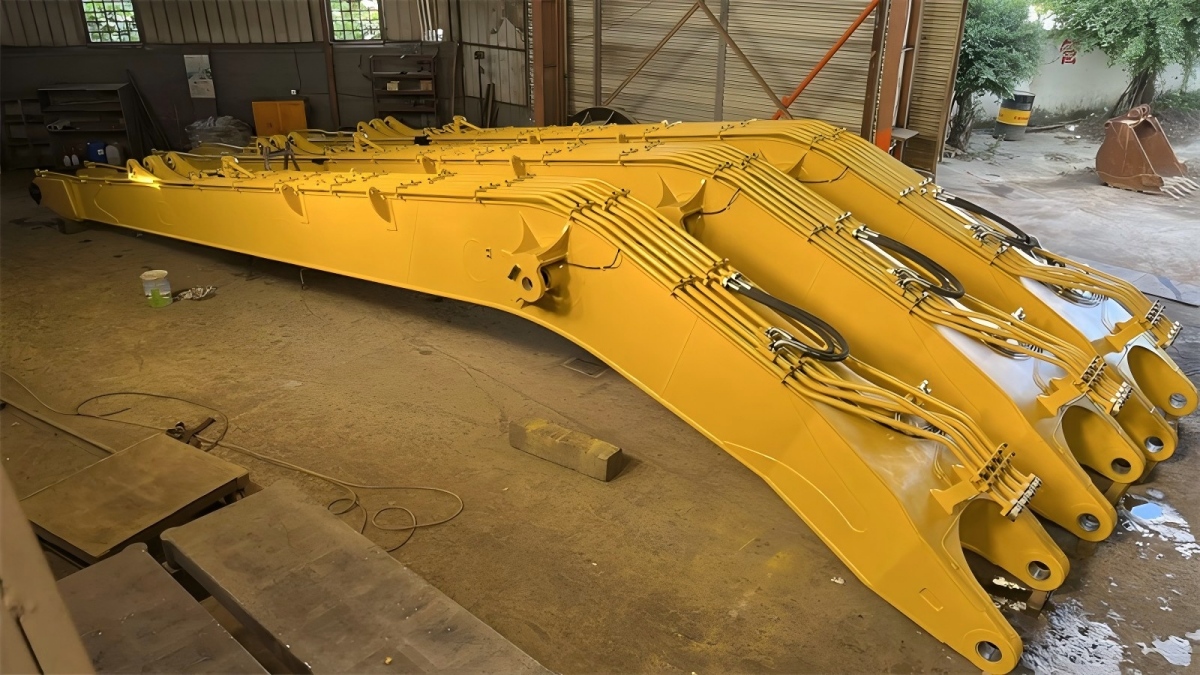
In contrast, the long stick excavator reach is specifically designed for tasks that require extended reach. This type of arm is significantly longer than the standard version, allowing the excavator to access areas that would otherwise be out of reach. The extended length is achieved by using longer boom and arm components, which are often more slender to maintain the overall weight balance. This design enables the excavator to perform operations at greater distances from the machine's base, such as in deep excavations or high demolition tasks.
Applications and Use Cases
The standard excavator arm is the go-to choice for most construction sites. Its balanced design allows for efficient excavation in typical ground conditions. Whether it's digging foundations, creating trenches for pipelines, or leveling ground surfaces, the standard arm provides the necessary power and precision for these tasks. It is also well-suited for loading and unloading materials in construction sites, thanks to its robustness and versatility.
On the other hand, the long stick excavator reach is ideal for specialized applications where extended reach is essential. For instance, in deep foundation excavation, a long stick excavator can dig deeper pits without the need to reposition the machine frequently. This is particularly useful in urban construction sites where space is limited and maneuverability is restricted. Similarly, in demolition projects involving tall structures, a long stick excavator can reach higher levels to dismantle buildings safely and efficiently. It is also commonly used in dredging operations, where the extended reach allows the excavator to access deeper water bodies for cleaning and maintenance.
Performance and Efficiency
When it comes to performance, the standard excavator arm offers a good balance of power and speed. Its design allows for efficient digging and material handling, making it suitable for continuous operation in various soil conditions. The standard arm's shorter length also means less energy is required to move the load, resulting in lower fuel consumption and operational costs.
However, the long stick excavator reach sacrifices some power and speed for its extended reach. Due to the longer arm components, the machine may experience a slight reduction in digging force and lifting capacity. This is a trade-off for the ability to access distant areas, which is essential for certain specialized tasks. Despite this, modern long stick excavators are designed to optimize performance as much as possible, ensuring they can still handle demanding jobs effectively.

Maintenance and Durability
Both the standard excavator arm and the long stick excavator reach require regular maintenance to ensure optimal performance and longevity. The standard arm's robust design generally makes it more durable in everyday use. Its components are built to withstand the rigors of frequent operation in various conditions. Regular checks and maintenance, such as lubrication and inspection of wear parts, are essential to keep the arm in good working condition.
The long stick excavator reach, with its extended components, may be more susceptible to wear and tear due to the additional stress on the arm. However, with proper maintenance and care, it can still provide reliable service for specialized tasks. It is important to monitor the arm's condition regularly and address any issues promptly to prevent costly repairs.
Dewanda Company's Long Stick Excavator Reach
When it comes to choosing a long stick excavator reach, Dewanda Company stands out as a reliable provider. With years of experience in the industry, Dewanda offers high-quality long reach diggers for sale. Their products are designed with advanced technology and materials to ensure durability and performance. Whether it's for deep excavation or high demolition tasks, Dewanda's long stick excavator reach can meet the demanding requirements of various construction projects.
Specific Industries Where Long Stick Excavator Reach is Preferred
The preference for long stick excavator reach over standard excavator arm is evident in several industries where extended reach and specialized tasks are required. For example, in the construction industry, long stick excavators are highly preferred for tasks that require extended reach and precision. In deep foundation excavation, long stick excavators can dig deeper pits without needing to reposition the machine frequently. This is particularly useful in urban construction sites where space is limited and maneuverability is restricted.
In dredging operations, long stick excavators are essential for accessing deeper water bodies for cleaning and maintenance tasks. This is crucial for maintaining waterways and ensuring proper drainage systems. For instance, in river and sea dredging, whether on land or barge, long reach booms provide an ideal solution for efficient material removal.
In demolition projects, especially those involving tall structures, long stick excavators offer significant advantages over standard excavators. The extended reach allows the machine to reach higher levels, making it safer and more efficient to dismantle buildings. This reduces the need for additional equipment and manpower, ultimately saving time and resources.
In the forestry industry, long stick excavators are used for tasks such as tree removal and land clearing. The extended reach allows the machine to access trees and vegetation that are further away, reducing the need for frequent repositioning and increasing overall efficiency.

The long stick excavator reach and the standard excavator arm each have their unique advantages and applications. The standard excavator arm is versatile and efficient for general construction tasks, while the long stick excavator reach excels in specialized applications requiring extended reach. Understanding the differences between these two types of arms can help construction professionals make informed decisions and select the right equipment for their specific needs. Whether it's for everyday excavation or specialized tasks, both types of excavator arms play a vital role in the construction industry. Dewanda Company's long stick excavator reach is a testament to the innovation and reliability that can be found in modern heavy machinery, ensuring that your projects are completed efficiently and effectively.
Dewanda will provide you with either standard excavator arm or long stick excavator reach. Please contact us.
Contact us for more information //www.dewandaparts.com/
Can I retrofit a long boom to my existing excavator ?
What is an Excavator Long Reach Arm and What is It Used For?