How long can the long arm of a 4 to 5 ton mini excavator be made and how should the counterweight be added?

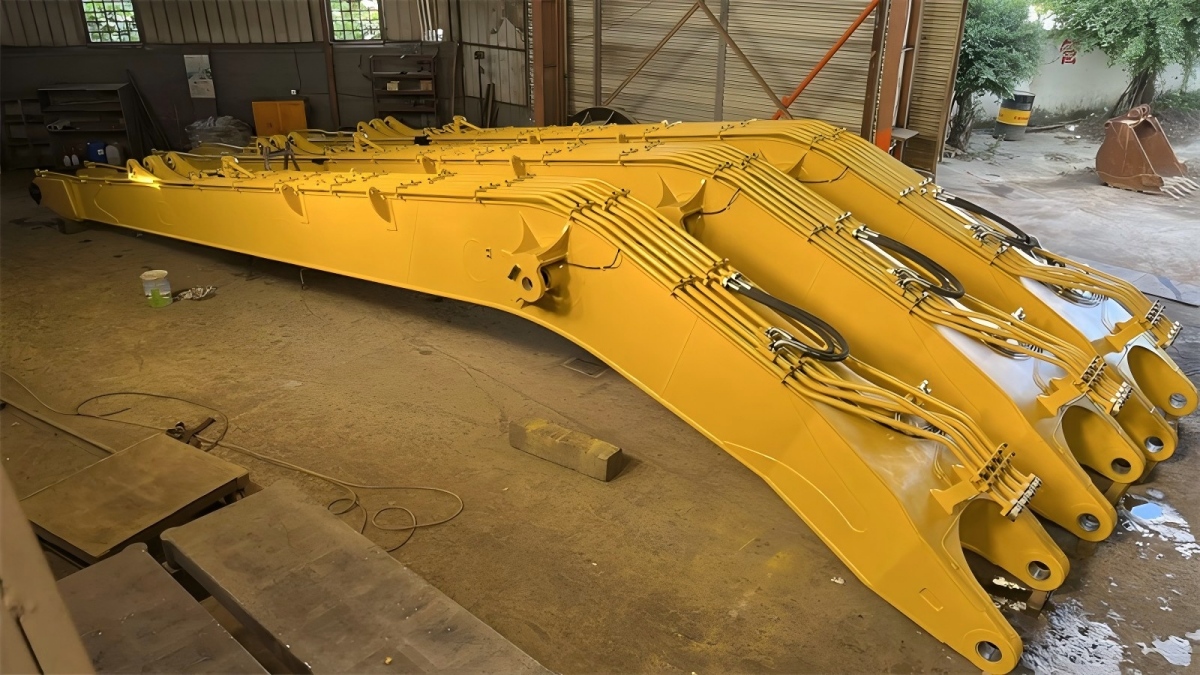
The 4-ton to 5-ton mini excavator can be equipped with an extended arm of 6 to 8 meters. It requires an additional 300kg counterweight. The bucket capacity is half that of the original bucket. If the original bucket is configured,then the counterweight should be increased to 500 kilograms. The 5.5-ton mini excavator can be made with an extended arm of 8 to 10 meters and requires a counterweight of 300 to 500 kilograms.
Both the bucket and the cylinder of the original vehicle can be used. Mini excavators ranging from 6 tons to 7.5 tons can be made with extended arms of 10 to 12 meters, all of which require additional counterweights of approximately 400 to 600 kilograms. If the original vehicle bucket is used again, the accessories will be more important.
Dewanda will show it to you in detail.
In the world of construction, customization can significantly enhance the performance and flexibility of machines like mini excavators. One of the most common and effective modifications is the installation of a long arm, particularly for 4-ton to 5-ton mini excavators. These upgrades are crucial for operations that require extended reach, such as deep trenching, river dredging, or certain demolition tasks. However, simply extending the arm isn’t enough — adjustments like counterweight optimization and bucket sizing must also be carefully considered to ensure safety and performance.
Dewanda, a trusted name in excavator parts and modifications, provides detailed insights into how to extend the arms of 4 to 5 ton mini excavators, and what counterweight measures are necessary to maintain machine balance and functionality.
Standard Arm vs. Long Arm: What's the Difference?
Before diving into the specifics, it’s important to understand the fundamental difference between a standard and a long arm on a mini excavator.
Standard Arm: Usually designed to balance performance, digging force, and reach. Ideal for most construction tasks but limited in terms of extended reach or depth.
Long Arm: Offers an extended reach, typically by 1 to 4 meters more than the standard arm. It’s ideal for projects that require reaching deeper or farther, though at the expense of reduced bucket capacity and increased stress on the machine.


Long Arm Specifications for 4 to 5 Ton Mini Excavators
Maximum Arm Length
For mini excavators in the 4-ton to 5-ton range, the long arm can typically be extended to 6 to 8 meters. This additional length allows operators to perform a broader range of tasks without repositioning the machine constantly, which is especially useful in:
River and canal cleaning
Slope trimming
Foundation digging
Lightweight demolition jobs
Rural construction work
However, the extension of the boom alters the machine's center of gravity, necessitating the use of additional counterweights.
Counterweight Requirements
Adding a longer arm increases leverage on the base of the excavator, which can make it unstable, especially when lifting heavy loads at full reach. Here’s a breakdown of the counterweight requirements based on different configurations:
For 4 to 5 Ton Mini Excavators
Standard setup with a reduced-capacity bucket:
Arm Length: 6 to 8 meters
Required Counterweight: 300 kg
Bucket: Half the capacity of the original bucket
Setup with original full-size bucket retained:
Arm Length: 6 to 8 meters
Required Counterweight: 500 kg
Bucket: Original bucket (increased weight = increased leverage)
For 5.5 Ton Mini Excavators
Arm Length: 8 to 10 meters
Counterweight Required: 300 – 500 kg
Bucket and Cylinder: Original components can be retained
This balance ensures the machine remains stable and operational efficiency is maintained without risking tipping or mechanical failure.
Additional Considerations for 6 to 7.5 Ton Mini Excavators
Though our main focus is the 4 to 5 ton range, it’s helpful to understand how this applies to slightly larger models as well.
Arm Length: 10 to 12 meters
Counterweight Required: 400 – 600 kg
Accessories: Must be compatible with increased boom stress; using the original bucket is possible but must be assessed carefully
Why Is the Bucket Capacity Halved?
When extending the arm of a mini excavator, the force required to operate the bucket increases. A larger bucket adds weight at the furthest point of the boom, putting enormous strain on the arm and risking structural damage or hydraulic system overload.
Using a smaller, lighter bucket:
Decreases tipping risk
Preserves the structural integrity of the arm
Maintains hydraulic efficiency
It’s important to note that while productivity per scoop decreases, the extended reach often compensates by reducing the need for machine repositioning.
Cylinder and Hydraulic Considerations
Often, the original hydraulic cylinder can be used, especially in 5.5-ton machines, but some modifications may require cylinder upgrades. Longer arms mean a larger volume of oil must be displaced in the hydraulic circuit, and in some cases, stronger or longer-stroke cylinders are recommended to maintain digging force and arm control.
Hydraulic system recalibration is also necessary in many cases to adjust:
Flow rate
Pressure settings
Load-holding valves
Structural Reinforcement and Safety Measures
When installing a long arm, reinforcing key components is essential:
Boom base and pivot points should be inspected and strengthened if needed
Pins and bushings must be upgraded to handle increased wear
Frame adjustments might be necessary to accommodate additional counterweight
Safety is paramount, especially when lifting at long reaches. Operators should be trained to:
Use reduced-speed operations for heavy lifts
Never lift beyond recommended capacity
Avoid swinging with a loaded bucket at full extension
Real-World Application Example
Let’s take a case where a contractor needs to clean a drainage canal with a depth of 5 meters and a width of 8 meters. A 4.5-ton mini excavator with a 7-meter long arm allows the operator to dig from one side without repositioning the machine or entering the canal — improving efficiency and safety.
With a 300 kg counterweight and a half-size bucket, the excavator can operate stably, even on uneven terrain. If the operator chooses to keep the original bucket for higher productivity, a 500 kg counterweight ensures the center of gravity remains safe.
OEM and Customization Services by Dewanda
Dewanda offers OEM and ODM customization services for all kinds of excavator booms and arms. Whether you’re retrofitting a 4-ton unit or upgrading a 7.5-ton model, our team provides:
Precision engineering designs
Custom arm manufacturing
Counterweight kits
On-site installation guidance
Hydraulic system optimization
We tailor every long arm to the specific machine make and model, considering its structural and hydraulic specifications.
Summary Table: Long Arm and Counterweight Guidelines
| Excavator Size | Arm Length | Bucket Type | Counterweight Required |
| 4 – 5 ton | 6 – 8 m | Half-size bucket | 300 kg |
| 4 – 5 ton | 6 – 8 m | Original bucket | 500 kg |
| 5.5 ton | 8 – 10 m | Original bucket | 300 – 500 kg |
| 6 – 7.5 ton | 10 – 12 m | Original or modified | 400 – 600 kg |
Upgrading your 4 to 5 ton mini excavator with a long arm is a smart move for specialized operations, but it must be done correctly. Counterweight adjustments, bucket sizing, and structural checks are not optional — they’re essential for safe, efficient use.
Dewanda’s expertise in excavator attachments ensures your long arm upgrade will be both durable and effective. Whether you’re a contractor, a dealer, or a rental fleet operator, our team can help you find the right configuration and support your operations from consultation to post-installation service.
Contact Dewanda today to learn more about our long arm customization services!
Contact us for more information //www.dewandaparts.com/
How the counterweight on an excavator ensures excavator's stability
How to determine if hydraulic oil viscosity is appropriate?