The compatibility and model matching issues of the extended arm of an excavator

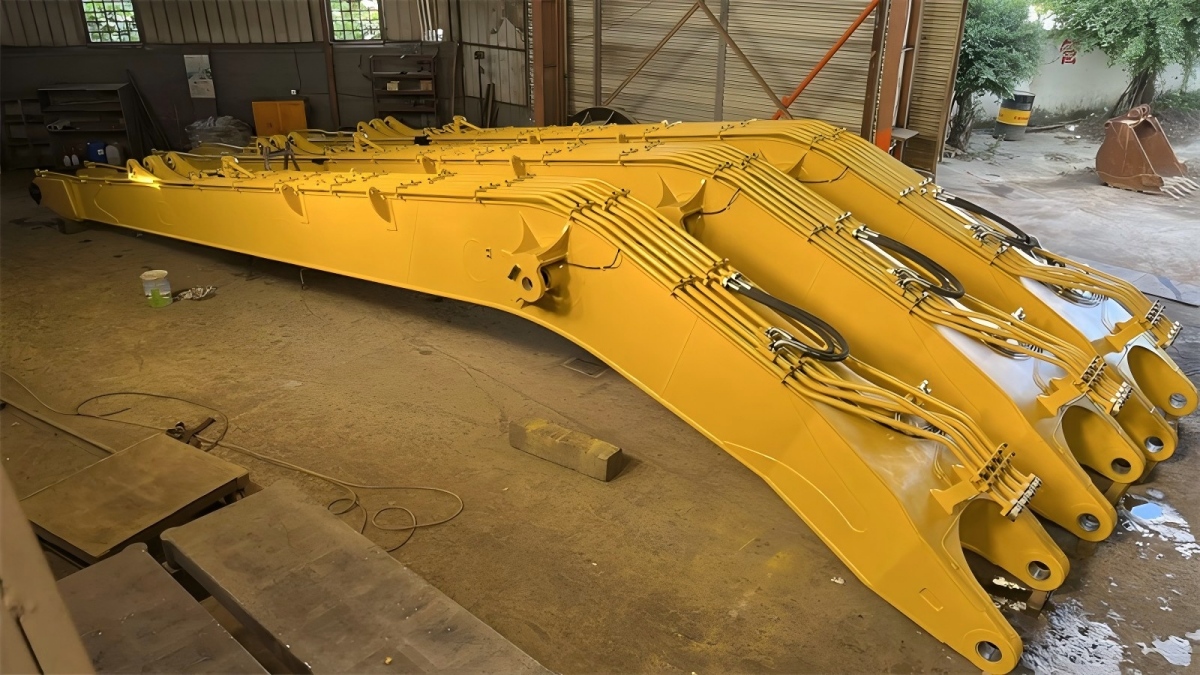
In the field of construction machinery, the functional expansion of excavators is often achieved by installing different attachments. Among them, long arms (extended booms) are commonly used modification components, widely applied in demanding tasks such as deep foundation pit excavation, river dredging, and mining. However, the compatibility and model matching of long arms are critical prerequisites for successful modifications. Insufficient compatibility can lead to performance degradation or, in severe cases, safety accidents. This article explores compatibility issues from three key dimensions—applicable model matching, interface compatibility verification, and modification requirement analysis—offering practical case studies and technical standards to guide purchasing decisions.
1. The Core of Compatibility: The Underlying Logic of Model Matching
1.1 Engineering Fundamentals of Model Matching
An excavator’s power system (engine power, hydraulic flow), structural strength (boom base bearing capacity), and balance (counterweight design) are fundamental parameters determining whether a long arm can be properly fitted.
For example:
Caterpillar 320D: With a standard hydraulic flow of 220L/min, installing a 12-meter long arm requires verifying whether the hydraulic pump can support the cylinder’s flow demand.
SANY SY215C: The OEM boom base uses Q345B steel. When installing a long arm, the welding process must match the original structural strength to avoid stress concentration and cracking.
Technical highlights:
Power-load balance: Long arms increase torque, requiring recalculations of engine power and hydraulic system load capacity.
Center of gravity compensation: Long arms shift the center of gravity, which may require additional counterweights or angle restrictions to prevent tipping. (e.g., Komatsu PC200-8 requires an extra 0.8 tons of counterweight.)
1.2 Complexity in Brand and Model Compatibility
Excavators from different brands vary significantly in design standards, and even different generations of the same brand may have compatibility issues:
Interface standard differences: Caterpillar uses SAE J1171 standard hydraulic quick couplers, while Hyundai might use ISO 16028, which can cause leakage if connected directly.
Pin size tolerance: SANY SY75C uses an 80mm boom pin, but some third-party long arms may be designed for 75mm. In such cases, a custom bushing or hole modification is necessary.
Case Study: A mining company installed a 10-meter long arm on a Caterpillar 336D, but hydraulic flow was insufficient, causing sluggish movements. Upgrading the hydraulic pump from 246L/min to 300L/min solved the problem, at an additional cost of over CNY 150,000 (approx. USD 20,000).
2. Interface Compatibility: Precision Matching of Hydraulic and Mechanical Systems
2.1 Challenges in Hydraulic System Compatibility
The hydraulic system is the "nervous system" of the excavator. The cylinders and piping of the long arm must seamlessly integrate with the machine’s original system:
Pressure and flow matching: If the required working pressure of the long arm cylinder (e.g., 25MPa) exceeds the valve’s rated pressure (e.g., 20MPa), it may damage the valve body.
Control logic compatibility: Some brands (e.g., Volvo) use electro-hydraulic systems. The CAN bus protocol may require reprogramming to prevent control conflicts.
Solutions:
Custom cylinders: Design cylinder stroke and diameter (e.g., increase from φ100mm to φ120mm) based on original parameters.
Add pressure relief valves: Install overflow valves in high-pressure circuits to protect the original system.
2.2 Key Details in Mechanical Connections
Tolerances in pins, bushings, and connection plates directly affect structural stability:
Pin diameter and material: Hitachi ZX200 uses SCM440 alloy steel pins (HRC45-50 hardness). Third-party arms using 45# steel (HRC20-25) can suffer accelerated wear.
Bushing clearance: Ideal clearance is 0.1–0.3mm. Larger gaps cause abnormal noise; tighter fits can lead to sticking.
Reference Standards:
ISO 10262: Specifies strength and fatigue testing methods for excavator connectors.
DIN 18800: German structural steel design standard, applicable for evaluating long arm welding quality.
3. Modification Requirement Analysis: From “Direct Installation” to “Deep Customization”
3.1 Ideal Scenarios Without Modification
Some OEM long arms (e.g., from Komatsu) are plug-and-play, but the following conditions must be met:
Same brand and generation: For example, Kobelco SK350LC-10 arms are designed for SK350LC-8 and above.
Identical parameters: Hydraulic flow, pin sizes, and control protocols must match exactly.
3.2 Common Scenarios Requiring Modification
Case 1: Cross-brand Compatibility
A user attempted to install a XCMG XE370CA long arm onto a LiuGong 925D, encountering issues:
Hydraulic fittings mismatch (XCMG uses metric threads; LiuGong uses imperial).
Boom base width difference (XCMG: 620mm; LiuGong: 580mm).
Solution:
Custom adapter flange (Material: Q355B, Thickness: 25mm).
Replace hydraulic quick couplers (metric to imperial, cost ~CNY 8,000).
Case 2: Upgrading an Aged Machine
A 10-year-old Sumitomo SH200-3 required a 9-meter long arm:
The original hydraulic pump showed a 15% pressure loss.
Pin holes had enlarged by 0.5mm due to wear.
Solution:
Refurbish the hydraulic pump and upgrade seals.
Repair pin holes via laser cladding (cost ~CNY 20,000).
3.3 Economic Evaluation of Modifications
Decision Tip: If total modification cost exceeds 30% of the machine's value or takes more than 15 days, consider purchasing a new machine instead.
4. Practical Guide for Verifying Compatibility
4.1 Technical Documentation Review
Original machine specs: Check hydraulic pressure, flow rate, and structural dimensions from factory data.
Long arm blueprints: Cross-check cylinder mount points, pin hole positions, and welding instructions.
4.2 On-Site Testing Procedures
No-load movement test: Check for smooth extension, retraction, and rotation without noise.
Load pressure monitoring: Use sensors (0–40MPa range) to track hydraulic system pressure peaks.
Stress distribution check: Use strain gauges or infrared thermography to detect stress concentration on the boom base.
4.3 Long-Term Reliability Verification
Fatigue testing: Simulate 5,000-hour work cycles to assess weld cracking risks.
Environmental adaptability: Test hydraulic oil viscosity and movement speed under extreme temperatures (e.g., -20°C to 40°C).
5. Industry Trends and Supplier Selection Advice
5.1 Rise of Modular Design
Leading brands (e.g., Liebherr) are launching modular long arms with standardized interfaces (e.g., ISO 13031), allowing rapid replacement and reducing the need for customization.
5.2 Supplier Evaluation Criteria
Technical expertise: Can they perform Finite Element Analysis (FEA) and dynamic simulations?
Certifications: Do they hold special equipment manufacturing licenses (e.g., China's TSG 07-2019)?
Service network: Can they provide on-site technical support within 48 hours?
The compatibility of excavator long arms is far more than a simple "dimension match." It is a systemic engineering challenge involving mechanical design, hydraulic engineering, and material science. Buyers should move beyond "price-first" thinking and adopt a rigorous approach combining technical validation and cost analysis to choose highly compatible solutions. Only then can modified equipment achieve the optimal balance of efficiency, safety, and cost-effectiveness.
Dewanda has standardized the compatibility process through technical pre-research and data accumulation, transforming complex customization needs into modular, quickly deployable solutions. For buyers, choosing Dewanda not only reduces modification risks but also enhances long-term equipment management efficiency through continuous data tracking.
Contact us for more information //www.dewandaparts.com/
Performance parameters for excavator long booms
10 key points customers must know about excavator long arms