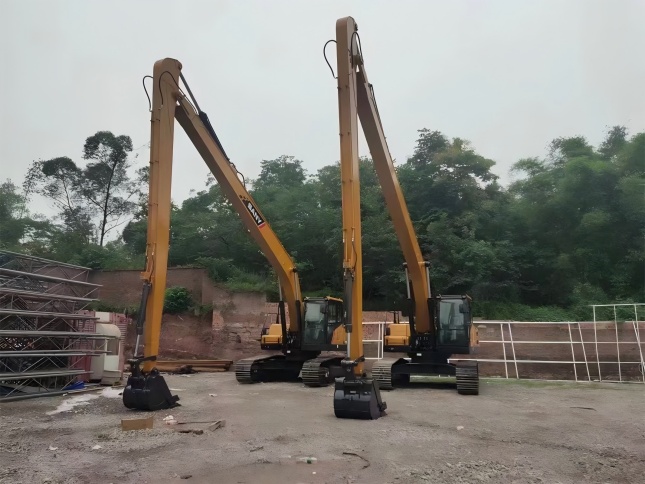
Common failures and solutions of excavator long arms

Excavator long arms are critical components in various engineering operations. Due to their complex structure and diverse working conditions, they are prone to different types of failures. To help operators and maintenance personnel address these issues effectively, the following is a detailed explanation of common failures of excavator long arms and their solutions from dewanda.
Hydraulic System Failures Of Excavator Long Arms
1. Hydraulic Oil Leakage
Hydraulic oil leakage is a common and troublesome issue. It is usually caused by natural wear and aging of sealing components due to long-term use or harsh environments. Rubber seals may deteriorate, hoses may rupture due to impact, abrasion, or poor quality, and connectors may loosen due to vibration, improper installation, or insufficient torque.
Solutions:
Perform a thorough inspection to locate all leakage points.
Replace damaged or aged seals such as oil seals and O-rings with high-quality replacements.
Replace any ruptured hoses immediately—continued use could damage the entire hydraulic system.
Use a torque wrench to tighten all connectors to the manufacturer-specified torque, ensuring proper sealing and stability.
2. Excessive Hydraulic Oil Temperature
High oil temperature reduces lubrication efficiency, accelerates seal aging, and may even cause equipment failure. Common causes include a clogged oil cooler (from dust or debris), insufficient hydraulic oil, overloading, and using oil with unsuitable viscosity for the environment.
Solutions:
Regularly clean the oil cooler using a high-pressure washer or compressed air.
Always check oil levels before operation and top up with the same model and grade of oil if needed.
Avoid long periods of overload; plan workloads reasonably.
Choose hydraulic oil with appropriate viscosity based on the working environment and equipment requirements.
3. Insufficient Hydraulic Pressure
Low pressure affects the long arm’s speed and power. Causes may include a worn hydraulic pump (from lack of lubrication or contaminated oil), malfunctioning relief valve (stuck spool or failed spring), clogged oil filters, or air trapped in the system.
Solutions:
Inspect and repair or replace the hydraulic pump if significantly worn.
Check the relief valve's working condition and replace damaged parts.
Replace hydraulic filters as recommended in the maintenance schedule.
Bleed the hydraulic lines to remove air, and check for leaks to prevent air re-entry.
Mechanical Structure Failures
1. Long Arm Deformation
Long arms may deform due to long-term overload, frequent impacts, or poor material quality. Deformation can compromise the safety and performance of the equipment.
Solutions:
Avoid overloading by operating within the rated capacity and following the operation manual.
For minor deformation, use cold or hot correction methods under professional supervision.
For severe deformation or cracks, replace the affected parts to ensure structural integrity.
2. Joint Wear
Joint areas endure frequent motion and high loads, making them susceptible to wear. Insufficient lubrication and dusty environments accelerate the wear process.
Solutions:
Establish a strict lubrication schedule and ensure quality grease is applied correctly and regularly.
Use precision measuring tools to monitor wear on pins and bushings; replace worn parts as needed.
In dusty environments, use protective covers to minimize contamination.
3. Loose or Broken Bolts
Loose or broken bolts can destabilize the entire arm, leading to serious accidents. Causes include vibration, insufficient tightening torque, or poor bolt quality.
Solutions:
Use a torque wrench to tighten bolts according to specifications and keep maintenance records.
Regularly inspect bolts during routine maintenance; replace broken ones and investigate the root cause.
Use thread-locking compounds or locking washers to prevent loosening and enhance reliability.
Electrical System Failures
1. Sensor Failures
Sensors monitor and control various aspects of the arm’s function. Failures can occur due to aging, physical damage, loose connectors, oxidation, or electromagnetic interference.
Solutions:
Identify the faulty sensor and replace it with a compatible one.
Ensure correct installation to avoid repeated damage.
Clean and secure all connectors and terminals.
Shield signal lines and separate them from power lines to reduce interference.
2. Controller Failures
The controller is the core of the electrical system. Failures may result from damaged components (due to overheating or aging), software errors, or unstable power supply.
Solutions:
Have qualified technicians inspect the controller using diagnostic equipment.
Replace damaged electronic components and update or reinstall software as needed.
Check the power supply system—battery charge, alternator output, and wiring condition—and fix any faults to ensure reliable power.
Maintenance Recommendations
Always follow the manufacturer’s maintenance manual during repairs to ensure safety and standard operation. For complex issues involving multiple systems, professional service is recommended to avoid secondary damage. Regular maintenance and correct operation habits are crucial to preventing failures, extending equipment life, and improving operational efficiency.
Contact us for more information //www.dewandaparts.com/
Global after-sales excellence for excavator extended booms
Dewanda’s Experience and Tips for Maintaining Excavator long arms
Related Article