Common mistakes when choosing an excavator long arm attachment

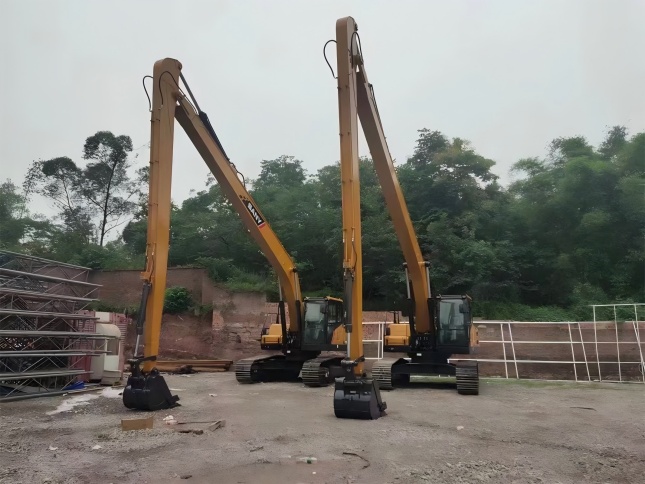
Selecting the right excavator long arm attachment can significantly improve efficiency on job sites like demolition, river dredging, deep trenching, and foundation work. But many equipment owners and project managers often make costly decisions when it comes to choosing the right long arm. These mistakes often lead to reduced machine performance, higher fuel consumption, structural damage, or even outright failure on the job. Below are the most common errors made during selection—mistakes that frequently come up in real-world fieldwork and procurement processes.
1. Assuming All Long Arms Are Universally Compatible
One of the most frequent errors is assuming that a long arm attachment is plug-and-play across different excavator brands and models. While the mounting pins, boom length, and cylinder specifications might appear similar, compatibility is more than just mechanical connection. It involves hydraulic flow rates, counterweight balancing, and control system integration.
For example, a long arm designed for a Komatsu PC200 may not function properly on a SANY SY215, even if their tonnage is similar. The geometry, hydraulic configuration, and center of gravity differ, which can cause issues like poor digging power, instability, or abnormal wear.
Real-world tip: Always verify compatibility not just by size class but by exact model and series. Confirm technical specs with both the long arm supplier and the excavator manufacturer before purchase.
2. Ignoring the Counterweight Requirement
A longer arm means greater leverage force pulling on the base of the excavator. Without a proper counterweight, the machine becomes front-heavy and prone to tipping forward—especially during lifting or fully extended operations.
Many buyers either underestimate or completely overlook the need for an additional counterweight. Some machines require 500–1000 kg of extra weight just to keep operational balance. Running a long arm without adjusting the counterweight is dangerous and can damage both the undercarriage and the boom over time.
What often happens in practice: Contractors try to “make do” by using heavier buckets or fill ballast in the track frame—both are poor substitutes for a properly engineered counterweight.
3. Choosing Length Based on Assumption, Not Project Requirements
Bigger is not always better. One common misconception is choosing the longest possible arm, assuming it will bring more efficiency. But in reality, an excessively long boom on a mid-size excavator can drastically reduce digging force and cycle speed. It also limits work in tight spaces and increases the risk of collisions with nearby structures or overhead obstacles.
In actual site scenarios, many operators find that they only use 70% of the arm’s reach. The remaining length is often unnecessary and reduces the speed of operations. A long arm should be tailored to the depth and reach requirements of a specific job. Overextension doesn’t just waste fuel—it can reduce productivity.
4. Overlooking the Hydraulic System’s Capability
Every excavator long arm attachment adds more hydraulic demand. Longer arms often require modified or reinforced cylinders and increased hydraulic pressure to maintain proper functionality. However, if the machine’s pump capacity is already maxed out or close to it, adding a longer boom without upgrading the system can lead to sluggish movement, poor breakout force, or overheating.
Field insight: Excavators working in hot climates or long operational hours are particularly vulnerable to hydraulic fatigue. Contractors often discover this only after continuous use—when seals begin to leak or performance noticeably drops.

5. Not Considering Transport Limitations
A frequently overlooked issue is transportation. Many long arms exceed standard trailer dimensions when installed, making the excavator harder or more expensive to move between job sites. For example, a 20-meter boom on a 20-ton excavator may require special permits or disassembly for transportation.
In some regions, this can delay projects by days or incur fines for improper loading. Some buyers realize only after purchase that the arm must be dismantled every time the machine is relocated, which adds to labor and fuel costs.
6. Failing to Factor in Structural Load and Chassis Wear
A longer arm puts more strain on the main boom pin, chassis pivot points, and undercarriage rollers. Many buyers install long arms without assessing whether the base structure of their excavator can handle the increased moment force. Over time, this leads to micro-cracks near the boom base, excessive bushing wear, and frame deformation.
This issue is particularly common in older machines or lower-cost Chinese brands without reinforced structural frames. Users often end up spending more on repairs than they saved on the arm itself.
7. Using Incompatible or Oversized Buckets
After installing a long arm, some operators continue using the same heavy-duty bucket they used for the standard boom. This is a major mistake. The added leverage of a long arm significantly reduces the lifting and breakout force. Using a heavy bucket adds more stress to the cylinders and structure, resulting in jerky movement and increased risk of damage.
In practice: Light-duty or slim-profile buckets are the better match for long arms. They're designed for dredging, loose soil, and light excavation—not breaking rocks or digging in hard clay.
8. Lack of Supplier Support or Incomplete Technical Documentation
Another pitfall is purchasing from suppliers who provide little to no installation support or technical documentation. Some companies offer long arms at discounted prices but don’t provide critical specs like cylinder pressure requirements, weight distribution data, or CAD drawings.
Without these, mechanics and operators are left guessing during installation. Worse, if something goes wrong during operation—such as cylinder misalignment or weld failure—there’s no manufacturer liability.
Choose suppliers that can provide:
Detailed technical drawings
Operating load limits
Material specs (Q345, Q690 steel, etc.)
Warranty terms
9. Forgetting Jobsite Conditions: Soil, Terrain, and Space
The physical environment plays a huge role in long arm performance. A jobsite with rocky soil, uneven terrain, or tight urban spacing may not be suitable for long arms. Yet many decisions are made based on machine specs alone, not worksite realities.
A contractor might invest in a 15-meter arm for a canal project, only to find the terrain too uneven for stable footing. Similarly, a long arm is nearly useless on a site full of overhead cables or trees. Practical field constraints often outweigh theoretical reach advantages.

10. No Operator Retraining
Switching from a standard arm to a long arm attachment changes the dynamics of machine control. The added length affects swing momentum, hydraulic response time, and precision. But in many companies, operators are put on the machine without proper retraining.
In real situations, this leads to over-swinging, accidental impacts, slow cycle times, and even safety hazards. A few hours of machine-specific retraining can prevent thousands in potential damage or downtime.
11. Disregarding Warranty Voids and Insurance Implications
Modifying an excavator with an aftermarket long arm can void the manufacturer’s warranty if not approved or documented. In addition, some jobsite insurance policies exclude coverage for modified equipment unless pre-registered. This is rarely considered until an accident occurs or a claim is rejected.
Before making a purchase, check:
Does this attachment affect OEM warranty?
Is your insurer informed of the modification?
Are there local regulations about equipment extensions?
12. Not Asking for Field Case References or Test Results
Suppliers that produce excavator long arm attachments should be able to provide references or case studies where their equipment is used. Many buyers skip this step, relying solely on photos or catalogs. But seeing how the product performs in real jobs—especially on similar machines—can offer valuable insight into durability, performance, and weak points.
In practice, clients who ask for video proof or project references often avoid low-quality or misfit products. It’s a simple but powerful step.
13. Poor Welding Quality or Underrated Materials
Some long arm failures stem from basic manufacturing issues—poor welding, substandard materials, or bad machining. Cracks near weld seams, misaligned cylinders, or pinhole leaks in hydraulic tubes are common in budget versions.
Unfortunately, many of these flaws aren’t visible until weeks into operation. That’s why it’s crucial to ask for inspection reports, third-party testing certificates, or better yet, visit the factory (or arrange a video inspection) before finalizing the deal.
14. No Consideration for Future Resale Value
Long arm attachments significantly modify the machine's profile. While useful for certain projects, they often limit the resale market for the excavator. Future buyers may prefer standard configurations and be unwilling to pay extra for a modified setup.
Some dealers even lower the trade-in value of excavators with permanent long arms. To avoid this, modular or detachable designs are recommended. They allow easier reversion to standard format.
Mistakes in choosing an excavator long arm attachment are not always obvious at the time of purchase, but they show up quickly in real jobsite performance. Whether it’s hydraulic mismatch, structural imbalance, or transport difficulties, the risks are very real. Buyers who take the time to evaluate the full picture—machine specs, site conditions, hydraulic demands, and structural loads—save money in the long run and avoid costly downtime.
Customizing excavator arms for special projects – What you should know
Global after-sales excellence for excavator extended booms
Related Article