Customizing excavator arms for special projects – What you should know

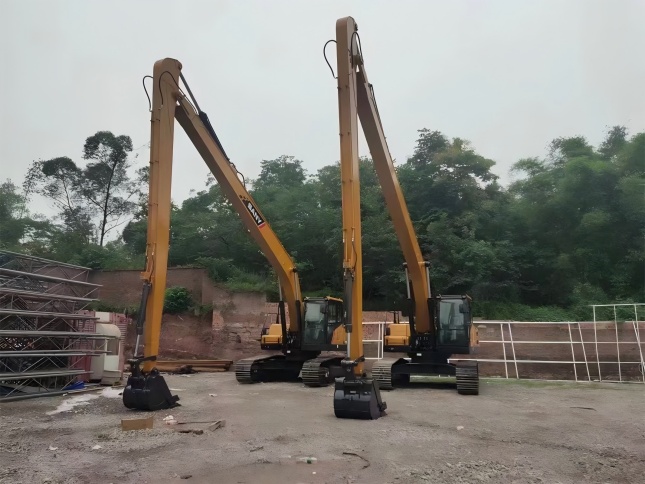
In the construction and earthmoving industry, not every project can be completed using standard equipment. From deep trenching in narrow urban zones to high-reach demolition and underwater dredging, unique site conditions often demand purpose-built tools. One of the most critical modifications in these cases is a custom excavator arm.
This type of customization can significantly enhance machine versatility, improve safety, and boost efficiency. However, ordering a custom arm isn’t as simple as placing a standard part in a shopping cart. It requires careful consideration of technical specs, site conditions, machine limitations, and long-term performance.
When and Why a Custom Excavator Arm Is Needed
Standard excavator arms are designed to perform well in general applications like digging, lifting, and loading. But in some cases, they either can’t reach far enough, don’t provide the strength needed, or are simply too bulky for the job.
Typical scenarios that require customization include:
Deep trenching or foundation work: When digging below standard reach limits.
High-reach demolition: Requiring longer or multi-segment arms to safely dismantle tall structures.
Riverbank or marine projects: Involving dredging, slope clearing, or bridge piling where extra reach and control are vital.
Confined spaces: Urban renewal or interior demolition may require compact or articulating boom systems.
Forestry and scrap handling: Custom grapples and arms improve material handling speed and precision.
Choosing the right custom excavator arm involves tailoring the machine to the site — not the other way around.
Key Factors to Consider Before Ordering
Designing a custom excavator arm involves more than increasing reach or strength. It’s a balance of engineering principles, field experience, and manufacturer capabilities. Below are critical factors that influence the process:
1. Base Machine Compatibility
Each excavator model has a unique hydraulic flow, structural capacity, and counterweight configuration. A mismatched arm can overstress the swing bearing, compromise boom cylinders, or reduce operational safety.
Check the base machine’s tonnage, hydraulic pressure, and flow rate.
Ensure frame and boom mounts can handle the added weight and torque.
Consider the travel motor and undercarriage stability for longer or heavier arms.
Manufacturers usually start the design by referencing OEM drawings and machine data sheets.
2. Project-Specific Dimensions
Customization must align precisely with project specs:
Required digging depth or reach height
Maximum horizontal radius
Bucket size and attachment compatibility
Angle of operation and clearances
If the project involves deep pit excavation, for instance, the arm must be long enough to operate without repositioning the excavator constantly. On the other hand, for demolition, keeping a stable center of gravity is crucial.
3. Material Strength and Arm Geometry
Not all steel is created equal. A quality custom arm uses high-tensile structural steel, often Q345B, Q690D, or equivalent. This allows the arm to withstand high-pressure loads without cracking or warping.
Custom designs may also adjust:
Boom shape (straight, curved, double-bend)
Reinforcement gussets for stress zones
Pin joint locations and plate thickness
Weight distribution is a key consideration, especially if the arm will be operating with a large bucket or shear.
4. Hydraulic Modifications
Extended or multi-function arms require additional hydraulic lines, valves, or cylinders.
Secondary circuits may be needed for grabs, breakers, or tilting buckets.
Hoses must be routed to avoid snagging and protected with guards or sleeves.
Flow rate adjustments might be necessary for synchronized operation.
Some complex custom arms also include quick couplers and electrical wiring for smart attachments.
5. Counterweight and Stability Adjustments
As arms get longer or heavier, the risk of tipping increases. To offset this, suppliers often recommend adding or replacing the counterweight.
A properly sized counterweight ensures the machine stays balanced under load.
Some manufacturers offer bolt-on counterweights tailored to specific arm builds.
In extreme cases, track width extensions or dozer blades may be suggested.
Failure to address balance issues can lead to severe machine damage or operator risk.

The Customization Process – Step by Step
Getting a custom excavator arm built isn’t an off-the-shelf transaction. It follows a structured engineering and fabrication process. Here’s how it typically unfolds:
Step 1: Initial Consultation and Needs Analysis
The customer describes their project in detail. This may include:
Working conditions (soil type, space, depth/height requirements)
Existing machine model and configuration
Type of attachments to be used
Project timelines and budget
Photos or site layouts are often shared to help engineers visualize the job.
Step 2: Engineering Design and Modeling
Using CAD software and structural analysis tools, the manufacturer designs the arm according to the specifications.
A 3D model is created for feedback and approval.
Stress points are analyzed using finite element analysis (FEA).
Hydraulic schematics are drafted if needed.
At this stage, experienced manufacturers can also make improvement suggestions, like reinforcing pivot areas or rerouting hoses more efficiently.
Step 3: Customer Confirmation and Pricing
Once the design is finalized:
The client receives a technical drawing, BOM (bill of materials), and production quote.
Payment terms and delivery timelines are confirmed.
Any auxiliary items (counterweight, hydraulic kits) are listed clearly.
No fabrication begins until both sides are aligned on specs and costs.
Step 4: Fabrication and Quality Control
This phase involves:
Precision cutting and welding of arm components.
Assembly and alignment of pin holes and cylinder mounts.
Installation of bushings, grease points, and hydraulic fittings.
Welds are inspected with ultrasonic or magnetic particle testing where required. Arms are usually painted and branded to match the customer’s fleet.
Step 5: Final Testing and Shipping
Before delivery, the arm undergoes:
Functional testing with simulated loads
Fitting tests with mock-up buckets or quick couplers
Pressure testing of hydraulic systems (if installed)
Proper packaging ensures that the product arrives safely even if it’s shipped internationally.
What Customers Should Know to Get It Right
Customizing an excavator arm isn’t a trial-and-error decision. It’s a technical investment. Buyers should be aware of the following:
1. Involve Your Operator Early
Many design errors can be avoided by consulting the machine operator during the design phase. They understand working angles, visibility issues, and ground conditions better than anyone.
2. Don’t Underestimate Shipping Costs
Long arms (especially those over 12 meters) may require special container sizes or open-top shipping. Always ask for DDP (Delivered Duty Paid) quotes to avoid surprises.
3. Request Load Charts
A reputable manufacturer can provide a load chart showing the safe operating capacity of the machine after the custom arm is installed. This ensures operators work within limits and comply with regulations.
4. Ask for Warranty Terms
Custom arms should carry a warranty — usually 6 to 12 months — especially for weld integrity and steel fatigue. Know what’s covered and what’s not.
5. Check Local Regulations
Some countries require equipment modifications to be certified or logged with government agencies. If you’re importing, make sure the custom part complies with local safety rules.
Real-World Example: Long-Arm Dredging in Southeast Asia
A construction firm in Southeast Asia needed to clear deep silt from a river canal with a depth exceeding 11 meters. Their standard 20-ton excavator maxed out at 9 meters of reach.
Instead of purchasing a new machine, they commissioned a custom excavator arm — a 15-meter long boom and stick combo with internal baffles and reinforced pin areas. The package included:
Bolt-on 1.2-ton counterweight
Hydraulic line extension kits
Wide GP bucket and cylinder recalibration
The custom build cost roughly 40% less than a new machine purchase and was delivered in 35 days. Within a week, the modified machine doubled dredging productivity.
In heavy equipment operations, there’s no one-size-fits-all solution. Custom excavator arms are a smart response to increasingly complex project demands. Whether you're managing slope stabilization, marine construction, or inner-city demolition, a tailor-made arm can bridge the gap between machine limitations and project requirements.
However, success in customization hinges on doing your homework. Know your machine, define your needs, and work with a manufacturer that understands both the technical and practical sides of arm design. A well-built custom excavator arm isn’t just a modification — it’s a performance upgrade engineered for your success.
Why Choose Dewanda Long Reach Booms
Common mistakes when choosing an excavator long arm attachment
Related Article