How to choose the right excavator long reach boom ?

In modern construction projects, excavators are indispensable, and the excavator long reach boom has become a popular modification to significantly extend the working range of standard excavators. Ideal for deep digging, river dredging, and slope shaping, a excavator long reach boom boosts job site efficiency-especially in specialized working conditions. However, with so many types available on the market, choosing the right one can be a challenge. This guide aims to help you make an informed decision by covering types, applications, key specifications, and buying tips.
1. What Is a excavator long reach Boom?
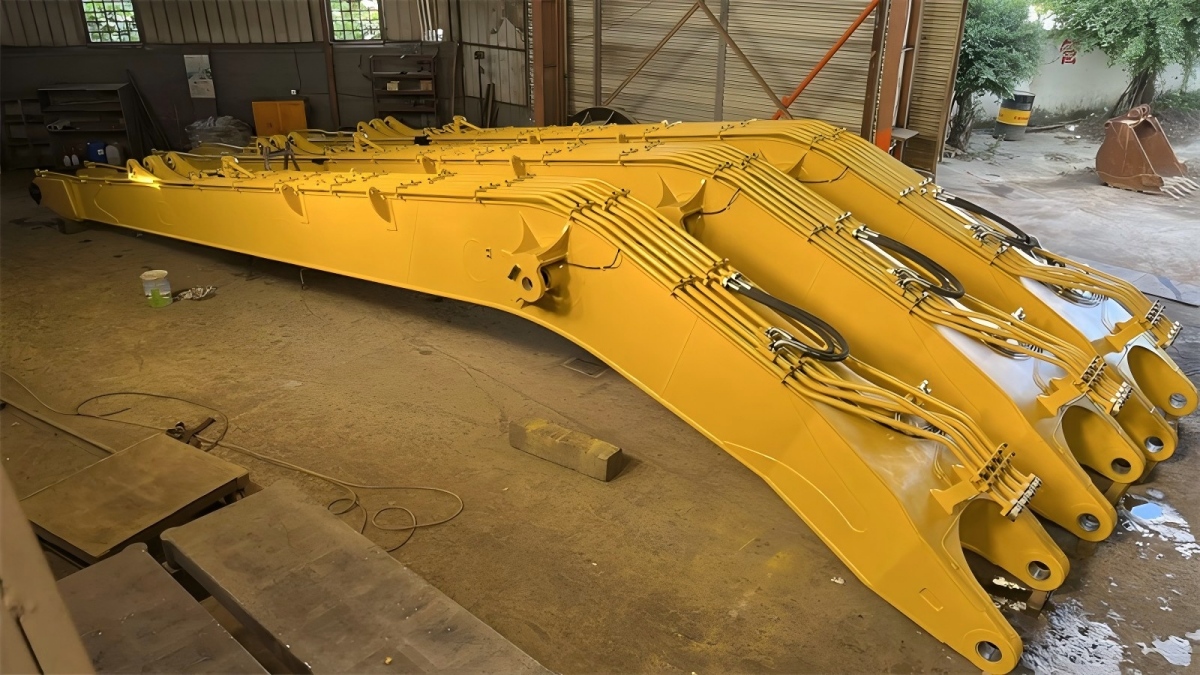
A excavator long reach boom is a customized extension arm designed to expand the reach and depth of standard excavators. It typically consists of an extended boom, stick (arm), linkage, and custom hydraulic cylinders, often paired with a lightweight bucket.
Compared to the original boom, the excavator long reach boom significantly increases the excavator’s horizontal and vertical digging range, allowing it to operate in areas that would otherwise be unreachable.
2. Typical Applications of excavator long reach Booms
Before selecting a excavator long reach boom, it’s essential to understand your job site requirements. Below are common scenarios where a excavator long reach boom is highly effective:
River and Canal Dredging: Extend the digging depth to remove silt and sediment from waterways.
Embankment Reinforcement & Slope Shaping: Perform work on high or unstable slopes from a safe distance.
Deep Excavation & Underground Projects: Reach deep pits without repositioning the machine.
Reservoirs, Ports & Docks: Cover large areas with low digging loads efficiently.
Mining & Waste Handling: Handle bulk materials or waste from a distance.
3. Common Types of excavator long reach Booms
excavator long reach booms come in various types, depending on structure and purpose:
1. Standard excavator long reach Boom
The most widely used type, typically in a two-piece structure (boom and stick).
Extended by 4–10 meters over the standard boom.
Suitable for general dredging and deep excavation.
2. Extra-excavator long reach Boom
Significantly extended for maximum reach (up to 18 meters or more).
Used with a lightweight bucket to reduce stress on the excavator.
Best for large-scale dredging and special excavation tasks.
3. Three-Piece Boom (Demolition Boom)
Designed for high-reach demolition, such as dismantling tall buildings.
Works with hydraulic shears, crushers, or hammers.
Improves efficiency and safety in vertical demolition.
4. Telescopic Boom
Features a retractable arm for flexible working distances.
Ideal for confined spaces or dynamic job conditions.
More costly and requires advanced maintenance.
4. Key Specifications When Choosing a excavator long reach Boom
When choosing a excavator long reach boom, the following parameters are critical:
1. Boom Length
Should match your excavator's tonnage and the job’s requirements.
Example: A 20-ton excavator typically fits a 13–15 meter excavator long reach boom.
2. Bucket Capacity
excavator long reach booms require lighter buckets (generally 0.2–0.4 m³) to maintain balance and reduce hydraulic stress.
3. Counterweight Requirements
Longer arms shift the center of gravity forward. Additional counterweight may be needed for stability.
Counterweight is usually customized by the manufacturer.
4. Hydraulic Cylinder Compatibility
Extended booms often need larger or longer cylinders to ensure proper movement and performance.
Check piston diameter and stroke length to avoid pressure loss.
5. Material Strength & Welding Quality
High-strength steel (such as Q355 or NM400) ensures structural integrity.
Excellent welding (double-sided welding, ultrasonic inspection) ensures safety and durability.


5. Step-by-Step Guide to Selecting the Right excavator long reach Boom
Step 1: Define Your Excavator Model and Job Site Needs
Provide your excavator’s specifications (tonnage, model) and site details such as depth and reach.
Step 2: Consult a Professional Supplier
An experienced manufacturer can customize the length, cylinder specs, and counterweight based on your needs.
Step 3: Confirm Technical Compatibility
Ensure the boom, hydraulic system, and frame are well-matched to avoid performance issues.
Step 4: Evaluate Safety and Efficiency
Choose a reputable supplier with reliable materials, strong welding, and full after-sales support.
Step 5: Verify Delivery Package
Check whether the excavator long reach boom comes with all necessary parts like pins, hoses, and connectors—saving time and cost.
6. Maintenance Tips for excavator long reach Booms
To extend the life of your excavator long reach boom and ensure safe operation, follow these tips:
Avoid Overloading: Don’t use oversized buckets or attachments for lifting—this can damage your machine.
Inspect Cylinders and Welds Regularly: Look for cracks, leaks, or deformities.
Clean After Each Shift: Remove mud or corrosive materials to prevent long-term wear.
Lubricate All Pins and Joints: Regular lubrication reduces wear and improves movement.
7. Frequently Asked Questions (FAQ)
Q1: Are excavator long reach booms interchangeable between different excavators?
A: Not recommended. Booms are typically customized for specific models to ensure compatibility and safety.
Q2: Is installation complicated?
A: Installation is straightforward with a complete kit and can usually be done within 1–2 hours by professionals. Installation Guide.
Q3: Will a excavator long reach boom affect my excavator’s lifespan?
A: Not if properly matched, balanced, and used within design limits. Quality materials and correct usage ensure safety.
The excavator long reach boom is a powerful tool that extends your excavator’s capabilities across a variety of specialized jobs. Choosing the right one involves understanding your equipment, job requirements, and working with a trusted supplier to ensure safety and performance.
If you’re looking for a reliable excavator long reach boom supplier, Dewanda offer customized solutions for customers worldwide. With expert design, quality materials, and comprehensive support, we help you maximize your machine’s potential.
Contact us for more information //www.dewandaparts.com/
Does a small excavator need a larger hydraulic cylinder when equipped with a long reach arm?
How the counterweight on an excavator ensures excavator's stability