Top 5 Mistakes People Make When Installing an Excavator Long Arm

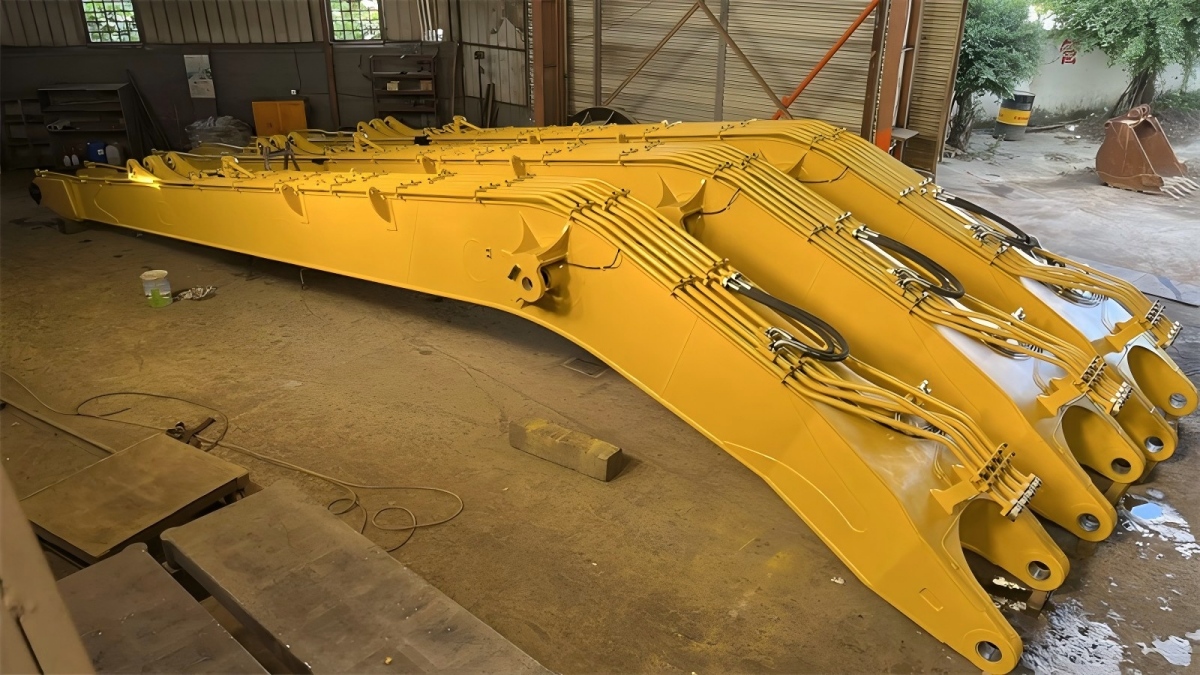
Installing a long arm on an excavator might seem like a straightforward upgrade—remove the old boom, fit the longer one, adjust some hydraulics, and get back to work. But in reality, we at Dewanda have seen time and again how small oversights or lack of preparation during installation can result in dangerous outcomes, machine failure, or long-term inefficiencies. After supplying and helping install long arms for excavators in various industries and job sites, we’ve gathered a solid understanding of what commonly goes wrong and how it can be avoided. Below are the five most common mistakes people make when installing a long arm, based on our real-world field experience.
1. Ignoring Compatibility Between the Long Arm and Excavator Model
One of the most frequent and damaging mistakes is installing a long arm that isn’t fully compatible with the excavator’s original model. Just because the pin size or length looks right doesn’t mean the long arm is engineered for that machine. Every excavator has load balance limitations, hydraulic flow settings, and frame tolerances that need to be respected.
We once worked with a client operating a 20-ton excavator who had purchased a long arm from another supplier, assuming it would fit because the boom dimensions matched. After installation, the machine’s rear began to lift off the ground during operation. The arm’s extra weight, paired with the excavator’s limited counterweight, threw the machine off balance. Our team had to step in and provide a counterbalanced arm specifically designed for that model, including proper weight distribution and structure reinforcement.
The right approach is to start with the machine’s specs—operating weight, hydraulic flow range, pressure ratings, and frame size. At Dewanda, every long arm is matched not just by physical fit, but by mechanical and structural fit. Our engineers custom-tailor the welding points, reinforce joints, and match hydraulic cylinder strength to the excavator’s capabilities. Without this, you risk structural fatigue, loss of stability, and reduced service life of both the arm and the base machine.
2. Failing to Upgrade the Counterweight
Long arms dramatically change the leverage and balance of the excavator. By increasing the reach, they also increase the amount of force acting on the rear of the machine. Without a properly sized counterweight, your excavator will tilt forward during lifting or digging operations, compromising safety and effectiveness.
In a river dredging project, a customer extended a 30-ton excavator’s reach by more than 4 meters using a long arm purchased from Dewanda. We strongly advised installing an additional 2.5-ton counterweight, which our fabrication team designed specifically for their machine. The customer initially delayed this upgrade to save costs, thinking the arm would perform just fine. On the first job, the excavator began to tip when the bucket was submerged, forcing a complete halt in operations.
Eventually, they added our counterweight assembly, which restored balance and allowed full operation at extended reach. The lesson here is clear: never underestimate the effect of leverage on an excavator. Every long arm installation should include a counterweight assessment, and in most cases, a custom counterweight solution is mandatory.
3. Overlooking Hydraulic Compatibility and Cylinder Capacity
Long arms don’t just change the length—they also alter the mechanical forces acting on the boom and bucket cylinders. A common mistake is reusing the original cylinders without recalculating whether they can handle the new geometry. Longer arms require more hydraulic force to achieve the same movement, especially when operating with a full bucket at the end of an extended reach.
One Dewanda client extended their 22-ton excavator’s arm by 3 meters for a deep excavation project. They kept the stock cylinders, which weren’t strong enough to control the new arm under load. As a result, the boom began drifting during holding operations, and the arm couldn’t maintain stable digging at full extension. Hydraulic pressure loss became a recurring issue.
We replaced the cylinders with high-capacity custom-built units with reinforced rods and revised pressure ratings. The new setup restored precision and allowed safe extended operation. At Dewanda, we always assess cylinder force vs. new lever arm length, ensuring full hydraulic performance. Reusing undersized cylinders puts stress on seals, increases wear, and leads to control issues.
4. Poor Welding and Reinforcement Practices
The structural integrity of a long arm installation hinges on the quality of the welds and reinforcements. Inexperienced fabricators may not understand the additional stresses introduced by extended arms. It’s not just about attaching metal—it’s about calculating where stress will accumulate during movement and digging, then reinforcing those points with gussets, wear plates, and layered welds.
One forestry customer attempted to extend their own boom using a local welding shop. The welds looked neat, but after three weeks of use, a joint cracked near the bucket linkage. The arm was taken offline, and Dewanda was called in to inspect the damage. We found that the original weld lacked internal reinforcement and was applied using incorrect techniques for high-torque areas.
Our team re-welded the boom with full-length gussets, internal sleeves, and a double-layer plate in the high-stress zones. The repaired arm performed flawlessly for the rest of the season. Long arm installation requires more than just cutting and welding—it needs engineering insight. Dewanda’s fabrication process includes finite element analysis to predict stress points and enhance durability.

5. Skipping Operational Testing and Recalibration
After installation, many operators rush back into production without taking time to test the new arm setup or recalibrate the machine. Excavator arms affect more than just reach—they change hydraulic behavior, balance, and control sensitivity. Without recalibration, your machine might respond unpredictably under load.
In one case, a contractor installed a Dewanda long arm for a canal maintenance job but didn’t recalibrate the flow control valves. The result was jerky movement, inconsistent digging depth, and increased fuel consumption. We sent technicians to conduct on-site testing, adjusted the hydraulic flow rate, and recalibrated the load-sensing system. Post-calibration, the machine operated smoothly and consumed 12% less fuel on average.
Dewanda includes a checklist with every long arm sold, covering valve tuning, pressure testing, swing speed balance, and joystick response. Skipping these steps can cause inefficiencies, operator fatigue, and machine wear.
Each of these mistakes can be avoided with careful planning, correct component selection, and expert support. At Dewanda, we don’t just sell long arms—we engineer and support the full lifecycle of the upgrade, from model selection to post-install testing. The performance of a long arm depends not only on its materials but on how well it integrates with the base machine. By addressing these five key areas, customers ensure a safer, more efficient, and longer-lasting installation.
Are you still looking for How to install long reach excavator booms ?
How to Use Quick Coupler on Excavator?
Excavator arm extension for demolition work: what to consider