10 key points customers must know about excavator long arms

Dewanda’s Immersive "Know Excavator Long Arms" Experience Program
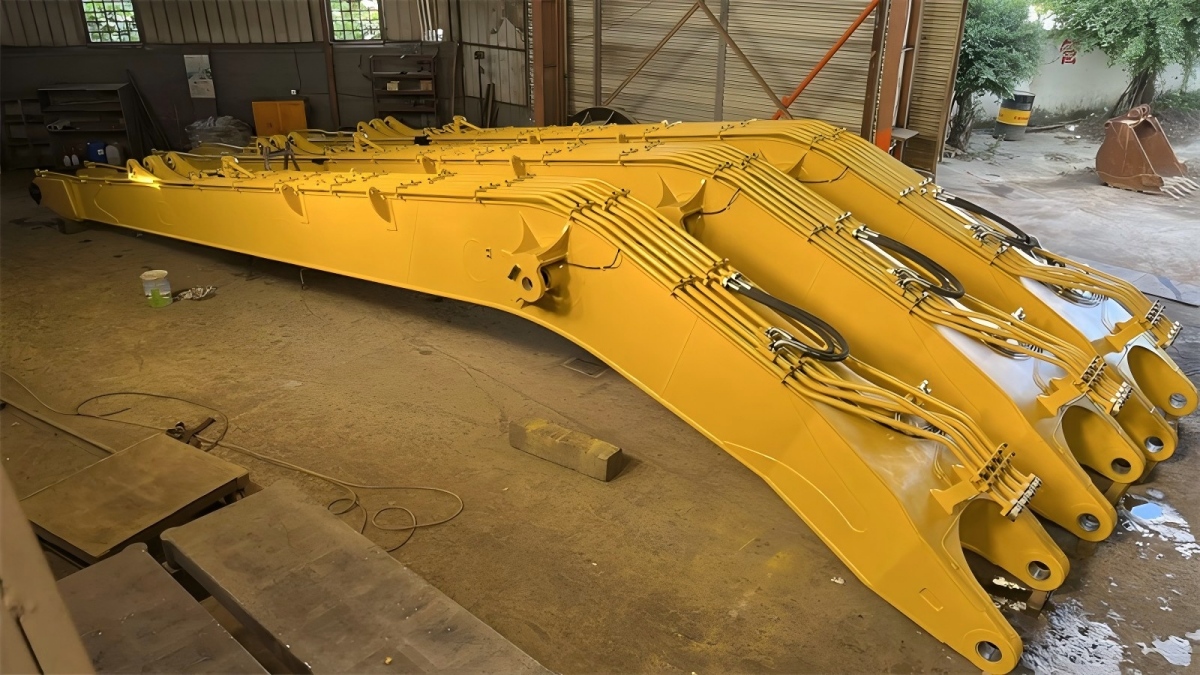
At Dewanda, we empower clients to truly know excavator long arms through hands-on exploration. Our tailored program guides customers from theory to practice, beginning with factory tours where we demonstrate custom solutions for major brands (Caterpillar, SANY, etc.) and material innovations like Q345B high-strength steel heat treatment. Clients witness live performance tests, comparing digging depths and stability metrics across 6m to 12m arms, while engineers explain safety protocols for scenarios like deep excavation or river dredging. Interactive workshops let clients deepen their know excavator long arms expertise—analyzing cost-benefit ratios, lead times, and lifetime maintenance plans. They even test smart safety features, such as overload alert systems, in simulated operations. By blending technical transparency, scenario-based validation, and lifecycle support, Dewanda ensures every client gains the confidence to know excavator long arms inside out, optimizing ROI with precision-engineered solutions.
1.Compatibility and Model Matching
Applicable Models: Is the long arm compatible with existing excavator brands and models (e.g., Caterpillar, Komatsu, Sany)?
Interface Compatibility: Do the hydraulic system and connection pin dimensions match the original machine?
Modifications Required: Are additional adjustments or adapter parts needed?
2.Performance Parameters
Length Options: Specific lengths (e.g., 6m, 9m, 12m) and corresponding digging depth/working radius?
Load Capacity: Maximum lifting weight and digging force—do they meet project requirements?
Stability Impact: Is counterweight adjustment needed? How does it affect machine balance and safety?
3.Material and Quality
Material Standards: Is high-strength steel (e.g., Q345B) used? Are heat-treated or anti-corrosion processes applied?
Certifications: Compliance with ISO, CE, or industry standards? Availability of third-party inspection reports?
4.Pricing and Costs
Cost Breakdown: Unit price, taxes, shipping, and installation fees—are they included?
Payment Terms: Deposit ratio, final payment conditions, and installment options?
Cost-Benefit Analysis: Price differences vs. performance across brands/suppliers?
5.Supply and Logistics
Lead Time: Production timeline and availability of ready stock?
Shipping: Domestic/international logistics costs, delivery time, and insurance coverage?
Customs Support: Assistance with tariffs and clearance for international purchases?
6.After-Sales Service
Warranty: Duration and coverage (e.g., structural components, hydraulic cylinders)?
Troubleshooting: Response time and on-site repair availability?
Parts Availability: Accessibility and pricing transparency for wear parts (e.g., pins, bushings)?
7.Installation and Technical Support
Installation Services: Professional team or detailed manuals provided?
Training: Safety training and maintenance guidelines included?
8.Brand and Supplier Reputation
Market Reputation: Is the brand well-known (e.g., Volvo, Liugong)? What is user feedback?
Case Studies: Successful project examples and customer reviews?
9.Maintenance and Lifespan
Upkeep Costs: Maintenance frequency, lubrication requirements, and cost estimates?
Durability: Expected service life under standard working conditions?
10.Safety and Compliance
Certifications: Compliance with local regulations (e.g., CE for EU, GB standards for China)?
Risk Management: Potential hazards (e.g., overload risks) and safety recommendations (e.g., warning systems)?
Contact us for more information //www.dewandaparts.com/
The compatibility and model matching issues of the extended arm of an excavator
How Long Can a 24-Ton Excavator's Long Reach Arm Be? How Much Counterweight Is Required?