How to Match Used Bobcat Excavator Buckets with Your Machine Model


Buying used Bobcat excavator buckets sounds simple until the bucket arrives and does not fit. In most cases, the problem is not the bucket quality — it is the mounting geometry. Pin diameter is slightly off. Center distance is misjudged. Ear width does not align. Or the machine uses a different quick coupler than expected.
Matching used Bobcat excavator buckets with your machine model is a technical process. When done correctly, it ensures safe operation, stable performance, and long service life. When done incorrectly, it creates premature wear, structural stress, and unnecessary repair costs.
This guide walks through the exact process contractors use in the field.
1. Start with the Machine — Not the Bucket
The biggest mistake buyers make is starting with the bucket listing instead of their own excavator.
Before looking at any used bobcat excavator buckets for sale, confirm:
Exact machine model (E20, E35, E50, E55, E85, etc.)
Production year
Arm configuration (standard or long arm)
Mounting system (direct pin-on or quick coupler)
Even within the same ton class, mounting dimensions can vary.
Typical Compact Model Reference
| Model | Operating Weight | Common Pin Size |
| E20 | ~2 ton | 25–30 mm |
| E35 | ~3.5 ton | 30–35 mm |
| E50 | ~5 ton | 35–40 mm |
| E55 | ~5.5 ton | 40 mm |
| E85 | ~8.5 ton | 45–50 mm |
These numbers are reference only. Always measure your own machine.
2. The Three Critical Dimensions That Decide Compatibility
Everything comes down to three numbers:
Pin Diameter
Center-to-Center Distance
Ear Width
If any of these are incorrect, the bucket will not function properly.
2.1 Pin Diameter — The Load Bearing Core
Pin diameter controls structural stability.
How to Measure Correctly
Clean the linkage pin.
Use a digital caliper.
Measure in multiple positions.
Check for wear taper.
If your caliper shows 34.3 mm consistently, the original spec is likely 35 mm with minor wear.
Never rely on old bucket pins as reference. Always measure the machine linkage side.
What Happens If It’s Wrong?
Too small:
Excess play
Rapid bushing wear
Risk of shear
Too large:
Forced installation
Binding during operation
Cylinder stress increase
2.2 Center-to-Center Distance — Alignment Accuracy
This is the spacing between the two mounting pins.
Measurement Method
Insert rods into both holes.
Measure from center of first pin to center of second pin.
Keep measurement straight and level.
Tolerance should remain within ±2 mm for compact machines.
If center distance is off by 4–5 mm:
Bucket will not sit flush.
Load distribution becomes uneven.
Coupler may fail to lock fully.
2.3 Ear Width — Side Stability
Ear width is the inside distance between mounting plates.
Correct clearance:
1–3 mm maximum side movement.
Too narrow:
Installation impossible.
Too wide:
Side movement.
Shim stacking.
Accelerated plate wear.
Side-to-side instability often causes crack formation near weld joints.
3. Coupler Type Changes Everything
Many used Bobcat excavator buckets fail compatibility checks because buyers ignore coupler configuration.
There are three common setups:
Direct Pin-On
Manual Quick Coupler
Hydraulic Quick Coupler
Aftermarket couplers can slightly modify geometry.
Before purchasing:
Confirm coupler brand.
Request mounting photos.
Compare locking system dimensions.
A bucket designed for direct pin-on will not automatically fit a dedicated hydraulic coupler without modification.
4. Bucket Type Must Match Machine Capability
Compatibility is not only dimensional. It is structural.
Common bucket types include:
Standard digging bucket
Trenching bucket
Grading bucket
Skeleton bucket
Heavy-duty rock bucket
Heavier buckets increase front load.
Example:
Installing a heavy-duty rock bucket on a compact E35 may:
Reduce lifting stability.
Increase stress on boom.
Shorten linkage lifespan.
Always compare bucket weight with machine capacity.
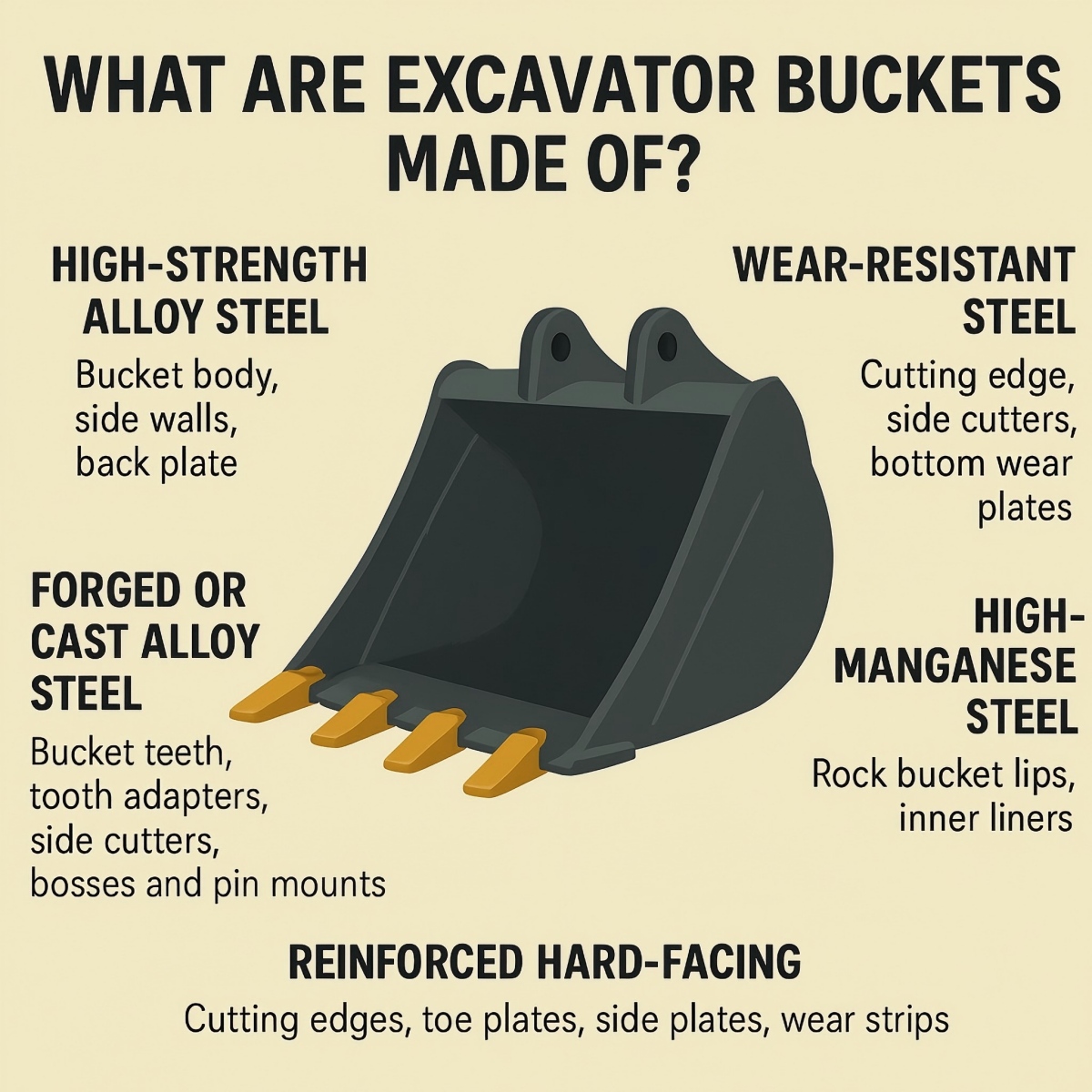
5. Inspecting Used Bobcat Excavator Buckets Before Purchase
Even if dimensions match, structural condition must be verified.
Cutting Edge
Measure thickness.
Replace if under 40% of original spec.
Bottom Plate
Look for:
Deep grooves
Thin spots
Uneven wear patterns
Ear Plates
Inspect around:
Weld seams
Pin holes
Reinforcement plates
Elongated pin holes indicate severe wear.
Weld Repairs
Professional reinforcement is acceptable.
Distorted or misaligned ear plates are not.
When buying used bobcat excavator buckets for sale internationally, always request:
Clear side photos
Close-up pin hole images
Measurement confirmation sheet
6. Real Compatibility Mistakes in the Field
Mistake 1 — Matching by Ton Class Only
Two 5-ton machines can have different linkage geometry.
Mistake 2 — Ignoring Wear on Machine Side
Worn bushings create false impression of bucket looseness.
Mistake 3 — Buying Without Exact Measurements
Listing descriptions like “fits 5-ton excavator” are not precise.
Mistake 4 — Overlooking Bucket Weight
Weight difference affects hydraulic response and stability.
Mistake 5 — Forgetting Shipping Configuration
Pins included or excluded changes fit confirmation.
7. Used vs New: Is It Worth It?
Used Bobcat excavator buckets offer major cost savings.
| Type | Price Range (USD) |
| New OEM | 900–1800 |
| Aftermarket New | 600–1200 |
| Used Good Condition | 300–800 |
| Repaired Used | 200–500 |
Used buckets are suitable when:
Machine is older.
Project is short-term.
Budget control is critical.
New buckets are better when:
Production volume is high.
Machine is new.
Long-term durability is priority.
8. Export and Shipping Considerations
For international buyers sourcing used bobcat excavator buckets:
HS Code
Commonly under 8431.49 (excavator parts category).
Shipping Method
LCL palletized
Nested stacking reduces freight cost
Volume Example
600 mm × 500 mm × 500 mm
= 0.15 CBM
Remove loose pins before transport to prevent damage.
Final Field Checklist Before Confirming Order
Before purchasing used bobcat excavator buckets:
Confirm exact machine model.
Measure pin diameter.
Measure center distance.
Measure ear width.
Confirm coupler type.
Verify bucket weight.
Inspect structural condition.
Request full dimension confirmation.
When all three mounting dimensions align and structural integrity is verified, compatibility issues disappear. Matching used Bobcat excavator buckets with your machine model is not complicated — it simply requires precision, patience, and measurement discipline.
Done correctly, used bobcat excavator buckets for sale become a highly cost-effective solution without compromising machine performance or safety.
What Can a 13m Long Reach Boom for CAT 312 Be Used For
How Is Excavator Bucket Capacity Measured in Real Construction Projects
Related Article