6 Signs It’s Time to Replace Your Excavator Bucket
At Dewanda, we’ve worked with thousands of excavator owners and contractors across construction, demolition, mining, and infrastructure development. One of the most overlooked yet critical components of an excavator is the bucket. It’s the front-line tool that directly interacts with the material—whether it's soil, rock, concrete, or debris. Over time, even the most robust buckets wear down. Operators often ask us: “When should I replace my excavator bucket?” It’s a good question because running with a severely worn bucket reduces productivity, increases fuel consumption, and may even endanger the operator.
There are six major warning signs that indicate it's time to replace your excavator bucket. Understanding these can save you costly downtime, prevent equipment damage, and keep your projects running smoothly.
1. Excessive Bucket Wear and Thinning Walls
The most obvious sign of a worn-out excavator bucket is material loss through abrasion and thinning of the bucket shell. Over time, especially in harsh working conditions such as abrasive soil, quarry rocks, or demolition debris, the steel walls of the bucket can wear down considerably.
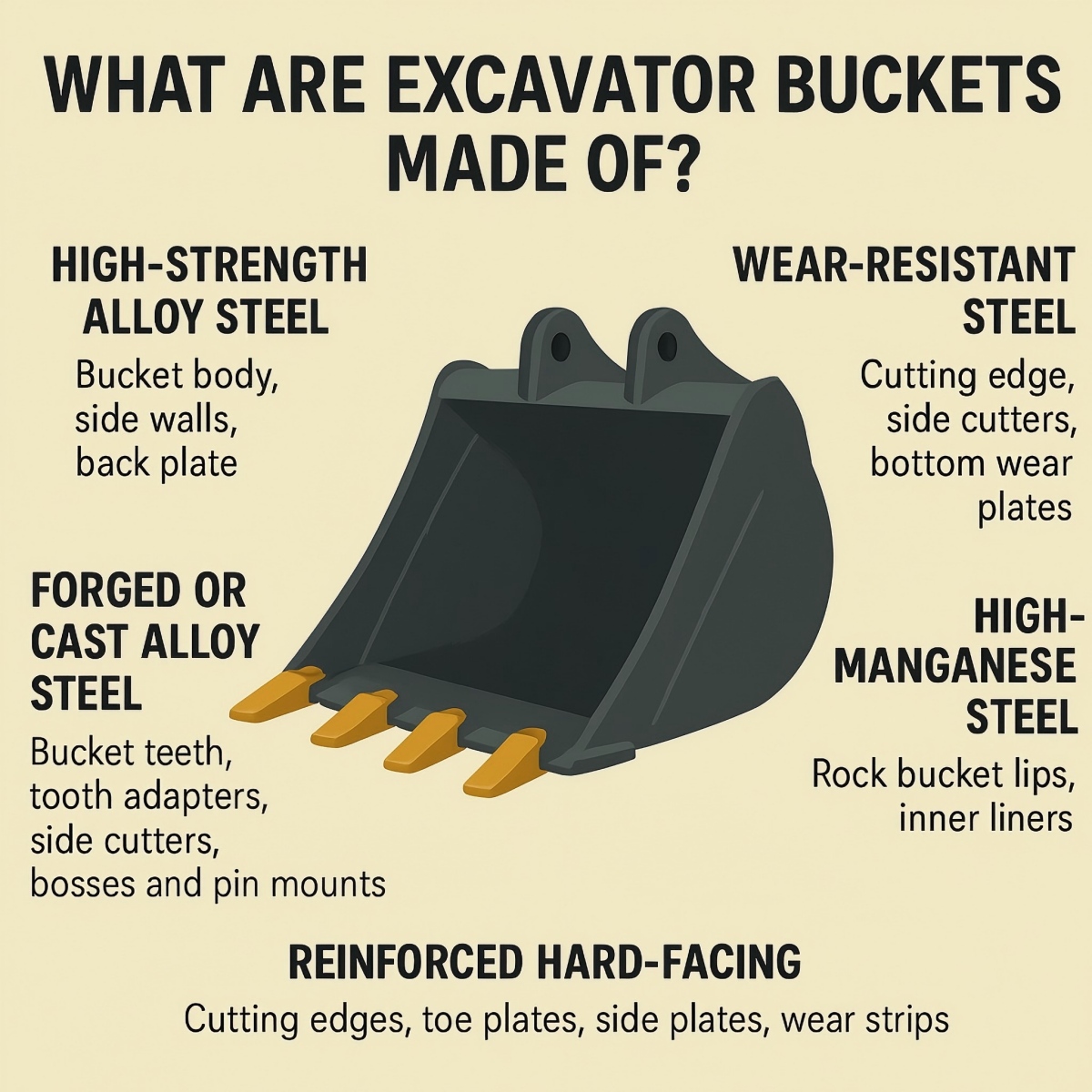
At Dewanda, we manufacture our buckets with high-strength wear-resistant steel like Hardox 400 or equivalent, but even the toughest materials have a service life. When the sidewalls, bottom plates, or the bucket's rear panel become noticeably thin—below 50% of their original thickness—it's time to consider replacement.
Common wear points include:
Bottom wear plates and bucket heel
Side cutters and bucket sides
Bucket floor, especially along the cutting edge path
Using a caliper or ultrasonic thickness gauge can help determine how much metal remains. Once the wear becomes severe, cracks may form, or the bucket may deform under load—both safety and productivity hazards.
2. Cracks Along Weld Lines or Bucket Body
Hairline cracks along the seams of the bucket or the connection points to the mounting bracket are a major red flag. These often start small and can spread rapidly if ignored. At Dewanda’s after-sales inspection services, we’ve seen too many contractors weld and re-weld their buckets until the structure is completely compromised.
Welded repairs are often temporary. Once cracks appear:
The integrity of the steel is already compromised due to metal fatigue.
Repeated welds may weaken surrounding areas.
Vibrations during operation can turn small cracks into total failure.
A cracked bucket may also misalign during digging, creating uneven load distribution on your excavator’s arm or pins. This accelerates wear on your entire digging system and poses serious safety risks on the jobsite.
3. Severely Worn or Missing Teeth
Excavator bucket teeth are designed to be replaced, but what many overlook is that worn teeth accelerate wear on the rest of the bucket. When bucket teeth are ground down:
The cutting edge becomes exposed and takes on more direct impact.
The digging efficiency drops, increasing cycle time per scoop.
Penetration into hard material becomes inefficient, stressing the machine.
At Dewanda, we stock a full line of teeth systems compatible with CAT, Komatsu, Hitachi, Volvo, and SANY machines. If more than 50% of the tooth length is gone, or if adapters are showing signs of deformation, it’s time to replace the teeth—and potentially inspect the bucket’s cutting edge and lip for damage.
Worn teeth may also cause uneven digging and damage to trench profiles, especially in precision work like utility installation.
4. Deformed Bucket Shape or Bent Structure
A healthy bucket maintains its structural geometry. Once the bucket becomes bent, twisted, or warped, its performance drops significantly. This deformation can happen due to:
Improper use, such as prying boulders or side-loading the bucket
Using the bucket for lifting or as a battering tool
Impact with underground obstacles
Bent buckets no longer provide clean cuts or predictable fill factors. They may also interfere with hydraulic coupler fitment or change the breakout force vector of your machine.
Field reports from Dewanda clients show that operators using deformed buckets often suffer:
Material spillage during travel
Uneven wear on pins and bushings
Hydraulic cylinder overwork due to skewed bucket angles
If your bucket isn’t sitting flush with the ground anymore or it loads unevenly, replacement is recommended. A twisted bucket may also affect grade control systems on modern excavators.
5. Worn or Damaged Mounting Points
The connection between the bucket and the excavator’s quick coupler or linkage is just as important as the bucket itself. If the mounting ears are:
Elongated at the pin holes
Cracked at the bracket welds
Worn to the point of pin slop
…it’s a major operational risk. Worn pins or holes may allow the bucket to shift during operation, causing instability, inaccurate movement, or even accidental detachment.
At Dewanda, we reinforce our bucket ears with high-tolerance bushings and heat-treated mounts, but improper greasing or overloading can still lead to deformation. If your pin-to-hole play exceeds OEM spec tolerances, bucket replacement may be a better long-term investment than re-boring or sleeving.
Additionally, badly worn mounting points stress your excavator’s arm tip and may void warranty on coupler systems if not corrected.

6. Poor Performance and Decreased Productivity
Sometimes, the biggest sign isn’t physical damage but decreased output. If your bucket:
Can’t fill to capacity anymore
Frequently drops material
Requires extra passes to complete the same job
…it may be undersized, deformed, or simply worn beyond efficient use. Contractors often try to extend the bucket’s life with patch plates, gussets, or weld-on protectors—but there comes a point when replacement is more cost-effective than repair.
Our clients often report a noticeable improvement in productivity—up to 20%—after switching to a new Dewanda bucket with proper geometry, teeth system, and material compatibility. On time-sensitive projects, those saved minutes add up.
Also consider whether your work environment has changed. A bucket designed for loose soil may no longer be suitable if you're now working in rocky ground or frozen clay.
Choosing the Right Replacement: Dewanda’s Excavator Buckets
When it’s time to replace your bucket, not all replacements are created equal. Dewanda’s bucket lineup is designed for global operators who demand quality, strength, and adaptability.
Our offerings include:
Standard buckets for light-duty digging in clay, loam, and sand
Heavy-duty rock buckets with wear plates, double-sided cutters, and reinforced backs
Skeleton buckets for screening and sorting
Tilt and trapezoid buckets for precision drainage and shaping
Custom designs for river dredging, mining, or demolition work
We use certified Q355, NM400/500, or equivalent alloy steel, depending on the application. Every weld is robotically inspected, and bushings/pins follow OEM-grade tolerance standards.
Advantages of choosing Dewanda:
Faster material handling
Reduced fuel costs due to better penetration
Longer service life under tough conditions
Custom options for local regulations or job-specific needs
Maintenance to Extend Bucket Life
While no bucket lasts forever, regular maintenance can delay replacement:
Grease your linkage pins daily to prevent seizure
Inspect wear areas weekly for signs of thinning or cracking
Replace teeth promptly to protect the cutting edge
Avoid using the bucket as a ram or lifting attachment unless rated
Use wear parts like heel shrouds or lip protectors where appropriate
Our field reps at Dewanda often assist customers with bucket maintenance training, wear part replacement scheduling, and routine inspections. We even offer refurbishment assessments to help you get the most from your investment.
Demolition Attachments: Which One Should You Use?
Long Arm Transport Tips: Safety First
Related Article