Demolition Attachments: Which One Should You Use?
Below is a breakdown of the most commonly used demolition attachments and where each type excels.
Hydraulic Breakers – For Tough Concrete and Rock
Hydraulic breakers, also known as hydraulic hammers, are a staple in heavy demolition. Designed to deliver rapid, high-impact blows, they are particularly effective when breaking reinforced concrete, pavement, stone, or rock.
At Dewanda, our hydraulic breakers range from mini excavator-compatible units to heavy-duty breakers for 30-ton machines. The core structure features wear-resistant materials, and we use advanced nitrogen-charged systems to increase striking power while minimizing recoil.
Best applications:
Breaking reinforced concrete slabs
Demolishing foundations
Tunneling and trench work in rocky terrain
Road and bridge demolition
Reducing large boulders on-site
Recommended model sizes:
0.8–3 tons: Compact breaker for interior demolition and small-scale concrete
6–10 tons: Mid-range unit ideal for residential buildings or light commercial jobs
20+ tons: Large hammer suitable for industrial structures and thick reinforced elements
Hydraulic breakers are the go-to tool when brute force is required. However, they may not be ideal in areas where excessive vibration or noise is a concern.
Hydraulic Shears – For Steel Structures and Metal Cutting
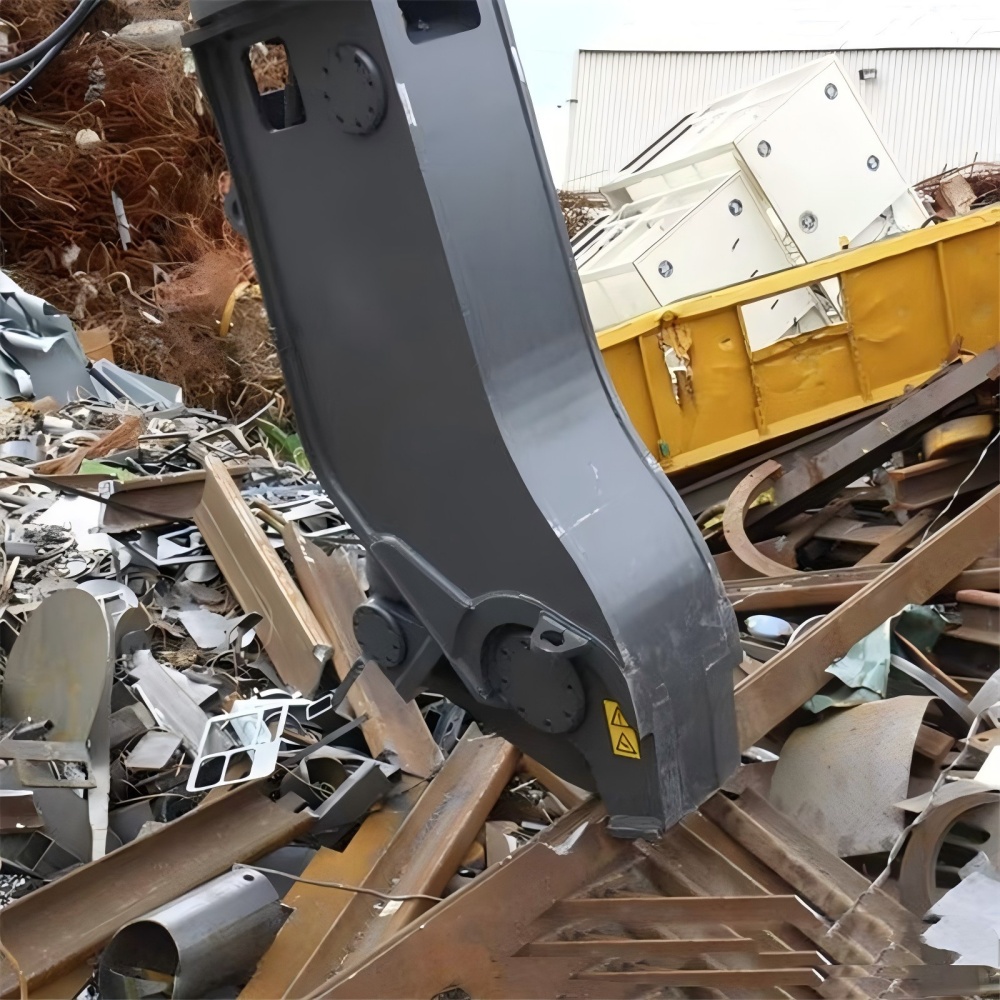
Shears are engineered for precision cutting through metal. Dewanda’s hydraulic shears are manufactured with high-strength blades, 360-degree rotating heads, and optimized jaw pressure ratios to offer clean cuts through steel beams, pipelines, rebars, and scrap metal.
Best applications:
Cutting steel beams in commercial or industrial buildings
Disassembling metal tanks or silos
Shipbreaking yards
Deconstructing bridges with heavy steel reinforcements
Recycling centers for scrap handling
Why shears over breakers?
Shears avoid flying debris and minimize vibration. They also preserve surrounding structures when selective demolition is needed. In confined sites like power stations or plants, shears provide controlled cutting—an advantage that hydraulic breakers lack.
Pulverizers – For Secondary Demolition and Rebar Separation
Pulverizers, often used after initial demolition, are ideal for crushing concrete and extracting embedded steel. Dewanda offers both fixed and rotating pulverizers to serve different operational styles.
Rotating pulverizers allow operators to position the jaw precisely, especially useful for selective work at height or in awkward positions. Fixed types deliver maximum crushing force and are generally lighter.
Best applications:
Crushing large concrete blocks
Separating rebar from rubble
Post-demolition clean-up
On-site concrete recycling
In many demolition projects, operators first use hydraulic breakers to bring down the structure and then switch to pulverizers to process debris. The combination increases both speed and efficiency.
Grapples – For Sorting, Handling, and Light Demolition
While grapples are not primary demolition tools, their role in handling materials, debris, and smaller-scale deconstruction is critical. Dewanda's hydraulic demolition grapples feature dual cylinders for improved clamping force, wear-resistant steel teeth, and custom jaw widths for different materials.
Best applications:
Sorting and loading demolition waste
Handling wood, drywall, insulation
Selective removal of panels, roofs, or drywall
Recycling centers
In urban demolition or interior strip-outs, grapples are the preferred attachment for precision and reduced impact. They also improve jobsite safety by reducing manual handling.
Multi-Processors – The Versatile All-Rounder
For contractors working across varied materials—brick, concrete, steel—multi-processors combine the functionality of shears, crushers, and pulverizers into one unit. Interchangeable jaw sets allow operators to switch between cutting, crushing, and breaking without changing the attachment body.
Best applications:
Multi-material buildings
Time-critical demolition projects
Remote or high-reach demolition
Projects requiring tool change efficiency
Though more expensive upfront, Dewanda’s multi-processors reduce downtime and are perfect for high-rise deconstruction, complex structures, or general contractors managing unpredictable job sites.
Selecting the Right Tool Based on Demolition Type
Here’s a guide to choosing the appropriate demolition attachment depending on the building or structure involved:
1. Reinforced Concrete Buildings
Use: Hydraulic Breaker + Pulverizer
Reinforced structures require initial breaking using a hydraulic hammer, followed by a pulverizer to crush rubble and recover rebar. If working at height, consider rotating pulverizers for reach and precision.
2. Steel Frame Factories or Warehouses
Use: Hydraulic Shear
These environments call for shears to cut steel beams cleanly. Shears minimize risk from rebound debris and preserve reusability of steel in recycling.
3. Brick Houses or Partition Walls
Use: Grapple or Pulverizer
Brick and block structures are easily handled with a grapple, especially for partial demolitions. For full tear-downs, a lightweight pulverizer delivers efficient crushing with minimal collateral damage.
4. Bridges and Infrastructure
Use: Hydraulic Breaker + Shear
Concrete decks and steel supports demand a combination of power and precision. Breakers remove concrete, while shears cut rebar and support beams. These are heavy-duty tasks suited for 20-30 ton machines.
5. Interior Strip-Outs
Use: Grapple + Mini Breaker
For confined indoor spaces, mini-excavators equipped with grapples and compact hydraulic breakers allow safe removal of walls, tiles, piping, and light concrete.
6. Ship Demolition and Heavy Metal Tanks
Use: Hydraulic Shears
Shears are indispensable in heavy industrial demolition. High-strength blades cut through layered steel, and rotating heads help reach tight angles.
7. Demolition Near Sensitive Structures
Use: Pulverizer or Shear
To avoid vibration and noise damage, avoid breakers. Instead, use shears or rotating pulverizers that allow clean, controlled removal of components without shockwaves.
Dewanda’s Custom Approach to Demolition Tools
At Dewanda, we understand that one-size-fits-all doesn’t work in demolition. That’s why we offer:
Custom jaw widths and blade lengths
Attachment compatibility consulting to match your excavator make and model
Wear-resistant upgrades for high-use applications
Quick-change coupler solutions to speed up tool changes on site
OEM or branded hydraulic systems depending on your preference
Each attachment goes through stress testing, quality assurance, and operational trials before delivery. We also support on-site trials and after-sales training for contractors in new markets.
How to Match a Hydraulic Pump with Your Excavator Model
6 Signs It’s Time to Replace Your Excavator Bucket
Related Article