Excavator Arms in the Mining Sector: How Dewanda Heavy Arms Perform Under Extreme Conditions

This is where Dewanda’s mining boom solutions—including custom-built heavy arms—come into play. Developed specifically for open-pit and underground operations, Dewanda arms are engineered to handle the extreme requirements of rock excavation, overburden stripping, and material loading in mineral extraction zones.
Mining Worksite Realities: Where Standard Booms Fall Short
Mining environments are brutal. The combination of high wear rates, unpredictable impact forces, and long-duty cycles tests every component of an excavator. Standard OEM arms, built for general-purpose use, often fail under such pressure. Here are the real-world challenges:
1. Abrasive and Dense Material
Unlike construction sites where earth and clay are predominant, mining tasks involve hard rock—granite, basalt, quartzite—or dense overburden mixed with large boulders. These materials subject booms to continuous stress and high-frequency vibrations.
2. Extended Reach Requirements
Mining benches and pit walls require deep reach and high dump heights. In many cases, the standard boom-arm configuration does not offer the geometry required to reach over benches or load high-sided dump trucks.
3. Heavy Attachments
Hydraulic breakers, rock buckets, and rippers are commonly used. These attachments are significantly heavier than conventional tools and generate high-impact shockwaves that can lead to weld fatigue, pin ovalization, or base plate cracking.
4. Continuous Shifts
Mining operations often run in two or three shifts daily. The arm must endure long periods of operation without structural distortion or hydraulic failure, and must also allow for efficient maintenance access.
Dewanda’s Mining Boom Engineering Philosophy
Dewanda does not modify standard booms—we build mining-specific heavy arms from the ground up. Each mining boom is designed based on geological survey data, machine model, and target work cycles. Core principles include:
1. Reinforced Structural Members
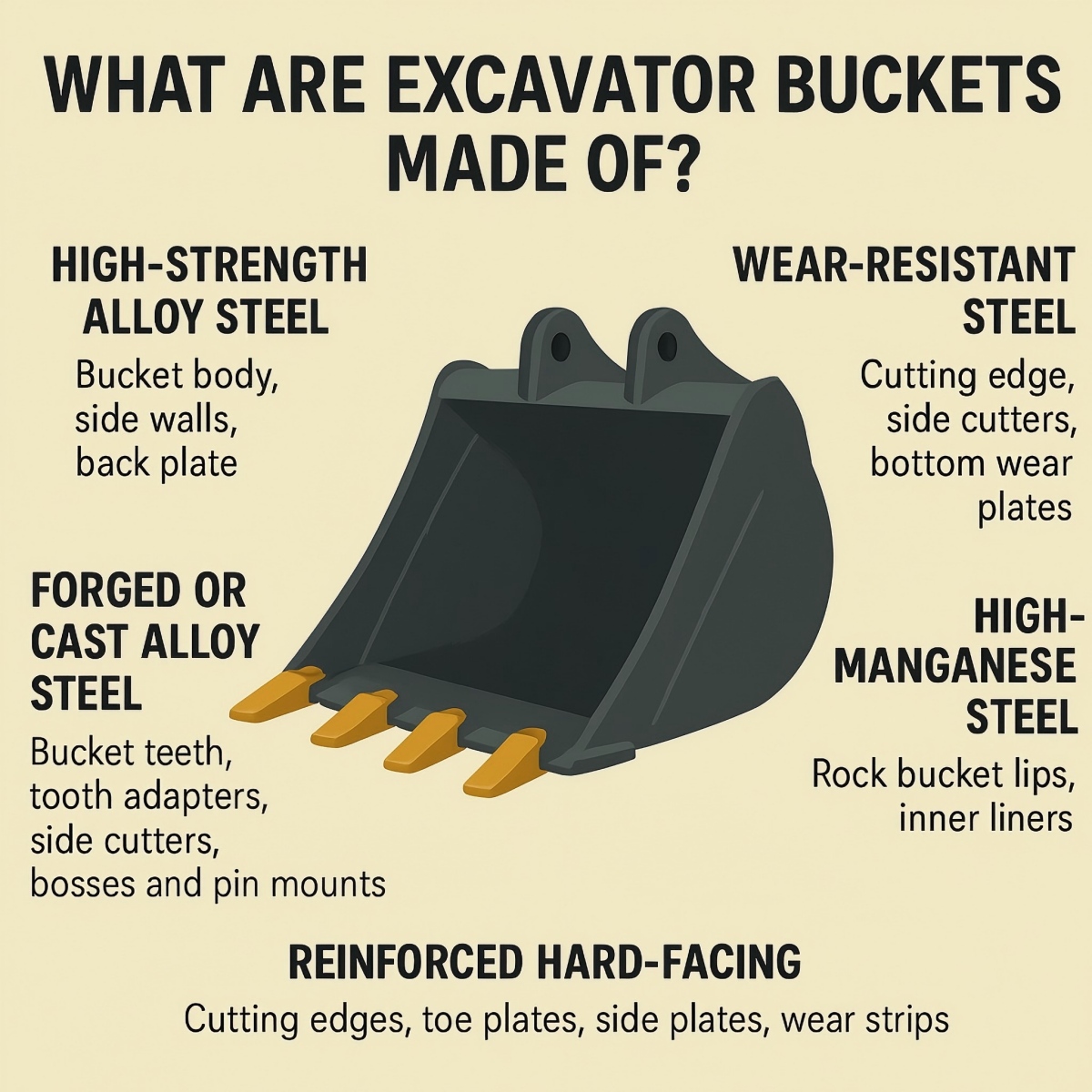
Every key section—boom base, arm tip, and cylinder mounts—is reinforced using high-tensile steel plates. Side plates are thickened, and gussets are added to the compression zones to prevent flexing.
Typical materials: Q690 or HARDOX 500 for abrasion resistance.
Weld zones use full-penetration welds tested with ultrasonic inspection.
2. Optimized Geometry for Deep Digging
The boom is extended and angled to offer an optimized reach-to-depth ratio, while keeping the machine’s center of gravity balanced.
Ideal for reaching 6–10 meter deep benches
Customized linkage geometry for oversized rock buckets or hammers
3. High-Torque Cylinder Brackets
Cylinder mounting points are strengthened and widened. On request, Dewanda installs over-stroke limiters or cylinder guards to protect hydraulic components from overextension or debris damage.
4. Pin Boss Hardening and Bush Upgrade
Pin bosses are induction-hardened and reamed with tight tolerance. High-load bronze bushings are inserted to prevent oval wear—a common failure point in heavy mining use.
5. Dust and Heat Management
Booms include sealed service ports, recessed grease lines, and heat-resistant hose routing options. For surface mines in high-temperature regions, optional thermal insulation plates are installed near weld-critical zones.
Attachment Compatibility and Stress Matching
Dewanda mining arms are never generic. Each one is configured to match the client’s attachment selection:
Hydraulic rock breakers (e.g., Soosan, Furukawa)
Heavy-duty ripper teeth
Rock buckets with side cutters
Tilted or fixed hammer brackets
By aligning the boom’s structural tolerances with the attachment’s impact forces, Dewanda minimizes the risk of weld fatigue or pin misalignment.
Common Machine Models Equipped with Dewanda Mining Booms
| Machine Base Model | Recommended Arm Length | Typical Application |
| CAT 330 / 336 | 6.5 – 8.5 meters | Rock breaking / Loading |
| Komatsu PC400 / PC450 | 7.0 – 9.0 meters | Bench clearing |
| SANY SY365 / SY500 | 6.5 – 8.0 meters | Open pit trenching |
| Hitachi ZX470 / ZX520 | 8.0 – 9.5 meters | Hard rock ripping |
| Volvo EC480 / EC530 | 7.5 – 9.0 meters | Stockpile rehandling |
Note: Each arm is customized for the client’s material density, elevation profile, and bucket type.
Real-World Case Studies
Case 1: Open-Pit Limestone Mine – Iran
A contractor operating in southern Iran required a reinforced boom for their 38-ton excavator. Standard booms were cracking at the base due to high impact from limestone blocks and constant breaker use.
Dewanda’s solution:
Supplied a 7.2-meter heavy arm with HARDOX side plates and reinforced cylinder mounts
Integrated a twin-gusset nose design to accommodate a 2.2-ton hydraulic hammer
Delivered the unit with extra bronze bushings for high pin-load tolerance
Outcome:
The arm ran for 11 months without requiring structural repair, a significant improvement over their previous setup which failed every 3–4 months.
Case 2: Iron Ore Loading Site – South Africa
Client needed an excavator capable of loading 60-ton dumpers with high-sided walls from a 4-meter depth pit.
Challenges:
Original boom lacked dump height
Arm would flex under full rock bucket load
Dewanda response:
Designed a 6.8-meter boom with increased arc angle
Welded reinforcement across the mid-arm section to reduce torsional flex
Custom lift chart included to help site supervisors manage load radius safety
Result:
Client increased loading efficiency by 23% and recorded zero arm failures during the 18-month deployment.
Case 3: Underground Tunneling Prep – Western China
For a narrow-access tunnel prep project, a contractor needed an excavator with breaker compatibility, but minimal width and maximum reach.
Dewanda configuration:
Built a compact-profile boom with side-angled bracing to fit 3-meter-wide drifts
Reinforced hydraulic ports to prevent line damage from overhead rockfall
Integrated cylinder protectors for side-impact absorption
Result:
The excavator completed 900 meters of pre-cut in 62 days with no coupler or arm failures—despite daily use with a 1.5-ton breaker.
Maintenance Features Built into Dewanda Mining Arms
Mining doesn’t allow for downtime. That’s why our heavy arms come with features that make field servicing faster:
External greasing ports with easy access, even with gloves
Bolt-on side wear plates that can be replaced without cutting or rewelding
Quick visual inspection marks at weld joints for crack detection
Arm-top lashing hooks for safer boom handling during transport or maintenance
We also offer optional spare pin kits and bushing sets pre-matched to each build to streamline site support.
Field Deployment and Support
When shipping a mining boom, Dewanda includes:
Complete engineering drawings with lift and reach chart
On-site or remote assistance during initial installation
Suggested torque values and pin lubrication schedules
Load simulation documentation (FEA available upon request)
Clients working in remote regions may also request modular crate packaging, where boom sections are sent separately and assembled at site using bolt flange connections.
8 Common Mistakes When Choosing a Excavator Long Arm
Safety Tips When Using Long Arms on Slopes
Related Article