Mini Excavator Long Arms: What You Need to Know
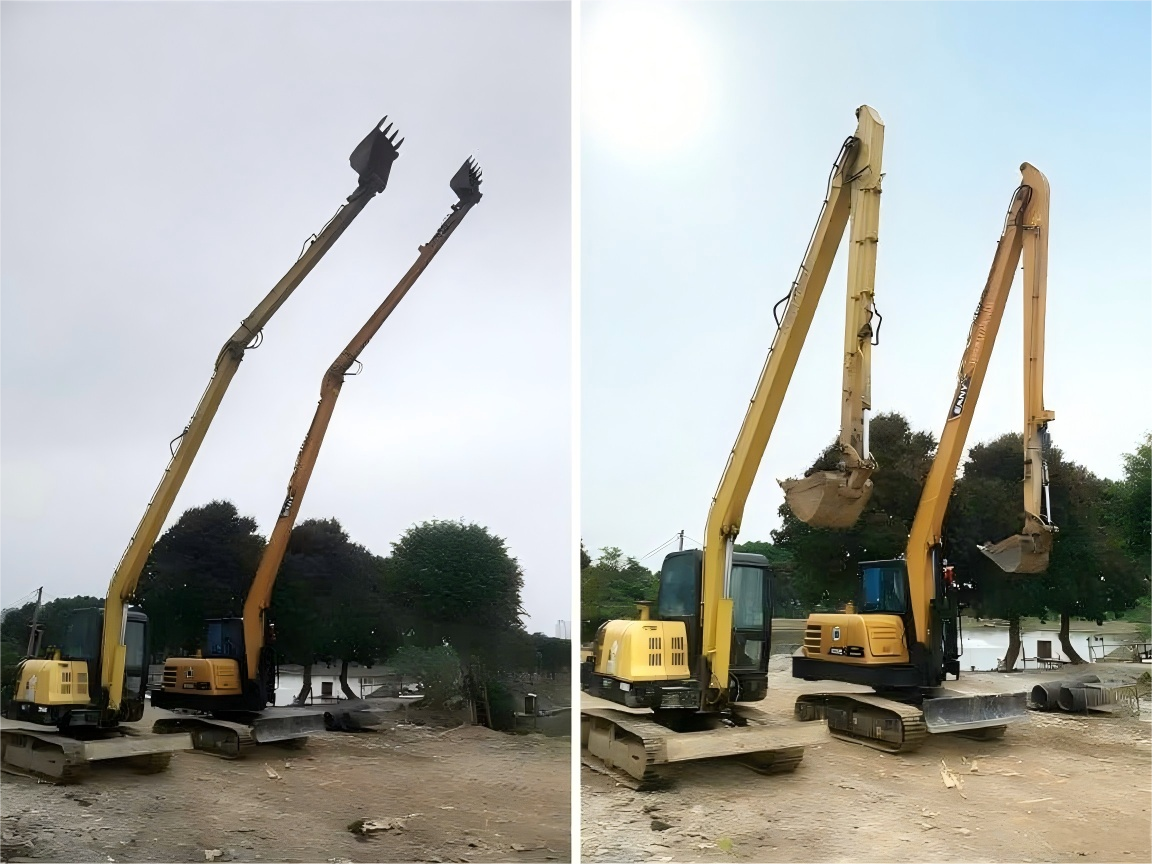
Attaching a long arm to a mini excavator can expand its working envelope significantly, but it’s not just a bolt-on accessory. Proper understanding of compatibility, hydraulic dynamics, counterweight balance, transport, and use-case suitability is critical.
The Role of Long Arms on Mini Excavators
Mini excavators are compact by design. Their short swing radius and low operating weight make them ideal for working in confined spaces. A long arm enhances these machines by:
Increasing maximum digging depth
Expanding horizontal reach (often by 1–3 meters)
Reducing the need for repositioning
Improving trenching performance on slopes or uneven ground
However, longer arms introduce structural and stability challenges, especially on lighter machines.
Types of Long Arms for 5 Ton Class Mini Excavators
Long arm configurations vary by length, shape, and function. Common setups include:
Standard Extended Stick (Boom remains stock)
Simple replacement of the stick portion
Adds 0.5 to 1.5 meters reach
Retains OEM hydraulic routing
Full Long Reach Kit (Boom + Stick)
Custom boom and stick pair
Adds 2 to 3 meters reach
May require modified hydraulic hose and mounting system
Telescopic Mini Arm
Adjustable-length stick with hydraulic extension
Suitable for variable-depth trenching
More complex maintenance and installation
Most 5-ton machines (e.g., Kubota U55, CAT 305.5, Komatsu PC55) are compatible with up to 12-meter reach extensions, provided the counterweight is upgraded.
Compatibility Factors
Before installing a mini excavator long arm, several compatibility checks are essential:
1. Machine Frame Strength
The arm increases front-end leverage.
Undercarriage must be able to handle added stress.
Reinforcements or thicker plates may be required on older models.
2. Hydraulic Flow and Pressure
The cylinder volume increases with arm length.
Ensure your pump delivers adequate flow rate.
Hydraulic tune-up or flow dividers may be necessary.
3. Counterweight
Essential for restoring balance.
OEM counterweights are often insufficient.
Bolt-on counterweights or steel plates behind the cab are common.
4. Bucket Size and Weight
Keep bucket size smaller than standard to reduce tip load.
Lightweight trench buckets are recommended.
Practical Use Cases for Mini Excavator Extensions
Long arm extensions for 5-ton excavators are widely used in:
Canal and Drainage Ditch Maintenance
Extended reach avoids driving on unstable banks
Urban Landscaping and Slope Work
Work across fences or retain walls without machine relocation
Utility Line Trenching
Dig deeper trenches in fewer passes
Small Building Foundation Backfilling
Reaches under existing structures or slabs
Agricultural Irrigation Channels
Works from the access road side
In these cases, the cost of a long arm attachment is far outweighed by the increased efficiency and reduced repositioning.
Transport Considerations
Long arms change the transport dimensions of your mini excavator:
May exceed legal trailer length
Requires foldable or detachable boom design
Tie-down points should be verified after installation
Always measure height and reach clearance before loading
Some OEMs offer break-away boom designs specifically for transport purposes.
Operational Tips and Training
Operators accustomed to standard arms need to adapt their behavior:
Swing inertia increases, requiring smoother movements
More precise joystick control is necessary to avoid bucket bounce
Visual depth judgment may be distorted at longer distances
Camera systems or boom-tip markers help in blind operations
Daily inspection of hoses, pins, and wear points is more critical due to increased reach stress.
Maintenance and Inspection Focus
Long arms experience higher wear due to increased torque. Key maintenance items:
Pin and bushing lubrication every 8–12 hours
Cylinder seals should be checked monthly
Weld joints inspected for micro-cracks
Hose wear and twist due to longer travel
It’s advisable to work with an arm supplier that offers after-sale inspection support or onsite service.
Real Project Reference
In 2024, a Japanese contractor specializing in cemetery construction used a Komatsu PC55MR with a 2.5-meter extended arm to dig 2-meter-deep trenches near walls and gravestones without relocating the machine.
Results:
Time saved: 35% per grave slot
Machine repositioning reduced by 70%
Operator safety improved significantly
They opted for a reinforced arm with anti-rust coating and dual auxiliary line integration. The project was completed 12 days ahead of schedule.
Cost Breakdown and ROI
| Item | Estimated Cost (USD) |
| Long Arm (2.5m extension) | $3,000–$5,000 |
| Counterweight Kit | $600–$1,200 |
| Installation Labor | $300–$700 |
| Hydraulic Tuning (if needed) | $400–$800 |
| Total Investment | ~$4,500–$7,700 |
Expected ROI:
Payback within 4–6 months for regular utility or drainage jobs
Greater returns in specialized urban access or slope work
Manufacturer and Supplier Selection
Choose a supplier that:
Offers arm customization (thickness, length, cylinder size)
Provides compatibility testing with your excavator model
Supplies additional counterweights or brackets
Includes warranty on welds and cylinders
Can deliver within 15–30 days for international orders
Avoid off-the-shelf generic arms without verification.
Working directly with a factory or OEM-trained supplier allows fine-tuning for reach, strength, and transport constraints.
Arm Features That Add Value
Reinforced box structure with wear strips
Anti-corrosion coating for swampy areas
Auxiliary line channels for hammers or grapples
Bolt-on flange for changing stick ends
Grease ports at all joints
These options can double the useful life and usability of the long arm.
Mini excavator long arms are not just an aftermarket gimmick—they are engineering tools that reshape how a small machine performs in big tasks. Contractors looking to bridge the gap between compact mobility and wide-area reach find exceptional value when this attachment is chosen thoughtfully and executed professionally.
The Story Behind Dewanda's Signature Arm Welds
Comparison: Long Arm vs. Telescopic Arm – Making the Right Choice for Your Excavator
Related Article