What Is an Excavator Hydraulic Breaker?
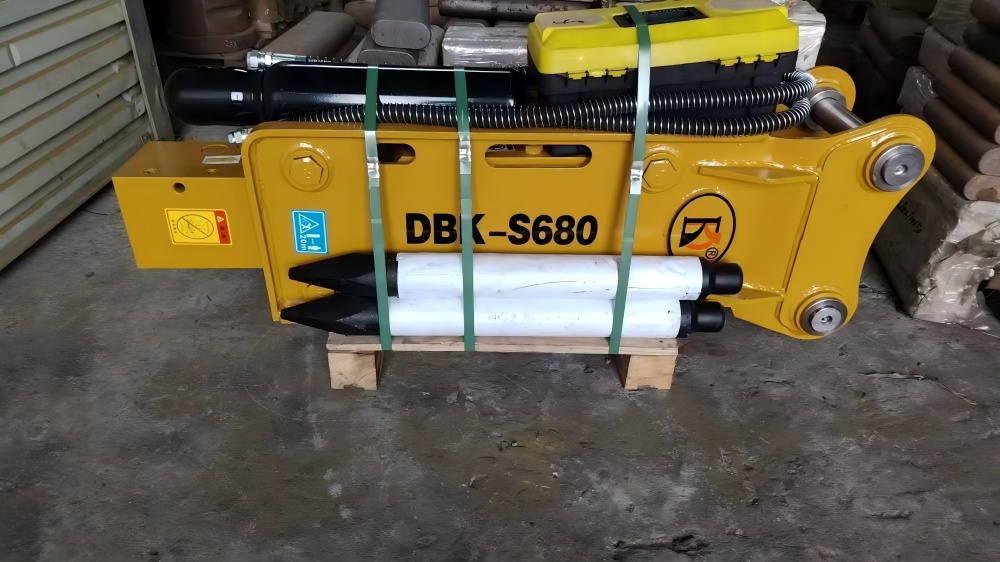
In demanding excavation projects, especially those involving rock, reinforced concrete, or demolition, an excavator alone often falls short. This is where the hydraulic breaker, sometimes called a rock breaker or hydraulic hammer, becomes indispensable. For contractors seeking maximum power and efficiency, a hydraulic breaker attachment offers brute force and surgical precision in one package.
At Dewanda, we specialize in designing and manufacturing durable, high-performance excavator attachments. Among them, our hydraulic breaker arms are engineered to handle the toughest jobs in mining, demolition, construction, and quarrying environments. Our units have been tested across regions with dense basalt rock, heavily reinforced structures, and compact trenching requirements where standard buckets fail to deliver.
Understanding the Excavator Hydraulic Breaker
A hydraulic breaker is a percussion hammer fitted to an excavator and powered by the machine’s hydraulic system. It works by converting hydraulic energy into kinetic force, which is then used to hammer a piston against a chisel or moil point, breaking up the target material. Depending on the application, the breaker tip may vary: moil point, wedge, blunt, or flat.
Rather than relying on rotary motion like a drill, a hydraulic breaker delivers rapid, repeated hammer blows to fracture solid materials. Breakers can strike anywhere between 200 and 1,000 times per minute depending on the model and settings. The result is a powerful, focused impact that penetrates rock or concrete with surgical accuracy.
The breaker comprises key components:
Hydraulic cylinder: Drives the internal piston.
Piston: Repeatedly strikes the chisel to generate impact force.
Chisel tool: The part in direct contact with material.
Accumulator: Reduces hydraulic shock and ensures consistent energy output.
Outer housing: Protects the internal components and reduces noise and vibration.

Where Hydraulic Breakers Excel
The utility of a hydraulic breaker is not limited to rock crushing. From roadwork to demolition, the attachment has a wide range of uses in sectors that demand precision breaking without compromising structural control.
1. Mining and Quarrying
In mining operations, especially surface mining and aggregate production, Dewanda hydraulic breakers offer efficient overburden removal, secondary rock breaking, and boulder reduction. When blasting isn’t permitted or is impractical, a hydraulic breaker becomes the primary method for rock fragmentation.
2. Urban Demolition
Noise, dust, and vibration limits in city demolition projects make hydraulic breakers the preferred alternative to explosives. Dewanda's silenced hydraulic breakers reduce decibel levels significantly, making them ideal for removing reinforced concrete walls, footings, and foundation structures in dense urban environments.
3. Roadwork and Trenching
Removing asphalt, concrete pavement, or creating utility trenches in rocky subsoil becomes significantly easier with a breaker. Compared to mechanical cutting or drilling, a hydraulic breaker works faster and produces less vibration, reducing wear on the base excavator and minimizing fatigue for the operator.
4. Tunnel and Pipeline Projects
When underground construction involves hard or abrasive rock, compact Dewanda hydraulic breakers can be paired with mini or midi excavators to safely operate in confined spaces. Precision breaking prevents damage to nearby pipelines or structures and allows better control during excavation in fragile environments.
5. Foundations and Pile Driving Prep
Breakers can also prepare the ground for piling by removing boulders or hard layers that conventional augers can’t drill through. A properly tuned hydraulic breaker reduces pre-drill time, helping speed up overall project delivery.
6. Agricultural and Rural Applications
Though less common, many rural contractors use hydraulic breakers to clear fields of embedded rocks, reshape terrain, or remove large embedded roots that can’t be handled with rippers.

Heavy Duty Build for Demanding Jobs
Dewanda hydraulic breakers are designed to meet the needs of contractors who push their machines to the limits. Our production facility uses high-alloy, wear-resistant steel in all major stress points. All internal components are CNC-machined for tight tolerances, reducing performance drift and improving life expectancy.
We offer several types based on working conditions:
Box-silenced type: Ideal for urban jobs and vibration-sensitive areas.
Side type: More economical, easier to maintain, preferred in open sites.
Top-mount type: Designed for maximum force transmission and stronger stability, suitable for heavy rock applications.
Our team also provides optional anti-blank firing systems to prevent piston damage when the tool isn’t in contact with material—extending life in operator-error situations.
Matching the Breaker to the Excavator
A common mistake is oversizing or undersizing the breaker relative to the host excavator. An overly powerful breaker on a light machine can damage the carrier’s arm or undercarriage. On the other hand, a weak breaker on a large machine can cause underperformance and unnecessary fuel consumption.
Here are some of Dewanda’s recommended pairings:
| Breaker Model | Recommended Excavator Weight | Impact Energy (Joules) | BPM (Blows Per Minute) |
| DW-HB100 | 1.5 – 3 tons | 250 – 350 | 600 – 1,000 |
| DW-HB200 | 4 – 6 tons | 400 – 800 | 500 – 900 |
| DW-HB400 | 7 – 12 tons | 1,000 – 1,500 | 400 – 700 |
| DW-HB600 | 13 – 18 tons | 2,000 – 2,800 | 350 – 650 |
| DW-HB800 | 20 – 26 tons | 3,000 – 4,500 | 300 – 550 |
| DW-HB1000 | 30 – 35 tons | 5,000 – 6,500 | 280 – 500 |
All Dewanda breakers include quick coupler compatibility options and can be fitted with different tool tips depending on application requirements.
Practical Considerations Before Buying
Before selecting a hydraulic breaker, contractors should factor in:
Carrier compatibility: Check hydraulic flow and pressure specs.
Job duration: For long-term usage, invest in a silenced, fully sealed unit.
Material type: Hardness and abrasiveness affect tool wear and energy needs.
Operator skill: Higher-end units often come with more features, which require experienced operators to fully utilize.
After-sales support: Downtime is expensive. Dewanda offers full technical support, fast spare parts delivery, and customized mounting solutions.
Our hydraulic breakers are exported worldwide and are trusted by clients working on everything from tunnel boring in Southeast Asia to granite mining in the Middle East. Each unit is pressure-tested before delivery, and optional wear kits, pistons, and nitrogen recharge kits are available for field maintenance.
If you have any questions regarding the attachments for excavators, please feel free to contact us for free consultation.
How to Extend the Life of Your Excavator Hydraulic Breaker: A Practical Guide from Dewanda
What Is a Excavator Rock Arm and Should You Consider One?
Related Article