What are the parts of an excavator?


Detailed Breakdown of Excavator Parts and Functions
1. Upper Structure (House) – The Core of the Excavator
The upper structure houses the operator’s cab, engine, and hydraulic system, serving as the control and power center of the machine.
1.1 Operator’s Cab – The Control Center
The cab is where the operator controls the entire excavator. Its design affects comfort and efficiency.
Control System:
Joysticks: Control the boom, arm, and bucket movements.
Foot Pedals: Used for travel and swing control.
Digital Display: Shows machine status, fuel consumption, working hours, and maintenance alerts.
Comfort Features:
Suspension Seat: Adjustable for height and angle, reducing operator fatigue.
Noise-Reducing Glass: Minimizes external noise for better focus.
Air Conditioning System: Ensures comfort in extreme temperatures.
ROPS & FOPS Protection: Rollover and falling object protection systems for safety.
1.2 Engine – The Power Source
The engine is the heart of the excavator, providing power to the hydraulic system and tracks.
Typically Diesel-Powered: Offers high torque and durability for heavy-duty work.
Popular Brands: Caterpillar, Cummins, Yanmar, Isuzu.
Key Performance Factors:
Emission Standards: Compliance with Tier 4 Final or China IV for environmental regulations.
Fuel Efficiency: Impacts operational costs and working time.
Cooling System: Ensures stable temperature during prolonged operation.
1.3 Hydraulic System – The Driving Force
The hydraulic system powers all major excavator functions, determining precision and efficiency.
Hydraulic Pump: Converts engine power into hydraulic energy, driving fluid flow.
Hydraulic Cylinders: Actuate the boom, arm, and bucket movements.
Hydraulic Valves: Control oil flow and pressure for coordinated operations.
Hydraulic Hoses: Connect hydraulic components, ensuring smooth oil circulation.
1.4 Counterweight – Stability Enhancer
The counterweight, located at the rear, balances the machine during excavation.
Function: Prevents the excavator from tipping forward.
Weight Range: Varies depending on machine size, from hundreds of kilograms to several tons.
2. Undercarriage – The Mobility System
The undercarriage determines the excavator’s adaptability and stability on different terrains.
2.1 Track System (For Crawler Excavators)
Tracks: Made of metal or rubber, suitable for rough terrains, providing better traction.
Track Drive Motor: Powers the tracks for forward and reverse movement.
Track Rollers: Support the track’s weight and minimize wear.
Track Tensioner: Maintains proper tension to prevent slack or detachment.
2.2 Wheeled System (For Wheeled Excavators)
Designed for urban and paved roads.
Faster movement speed compared to tracked excavators.
Equipped with hydraulic outriggers for stability during operation.
3. Working Attachments – The Functional Core
The excavator’s front-end attachments enable it to perform digging, lifting, and demolition tasks.
3.1 Boom – Main Lifting Arm
Connects the upper structure to the arm and determines digging height and reach.
Types:
Standard Boom: For general excavation.
Long Reach Boom: For deep digging or extended reach tasks.
3.2 Arm (Stick) – Controls Digging Radius and Depth
Connects the boom to the bucket.
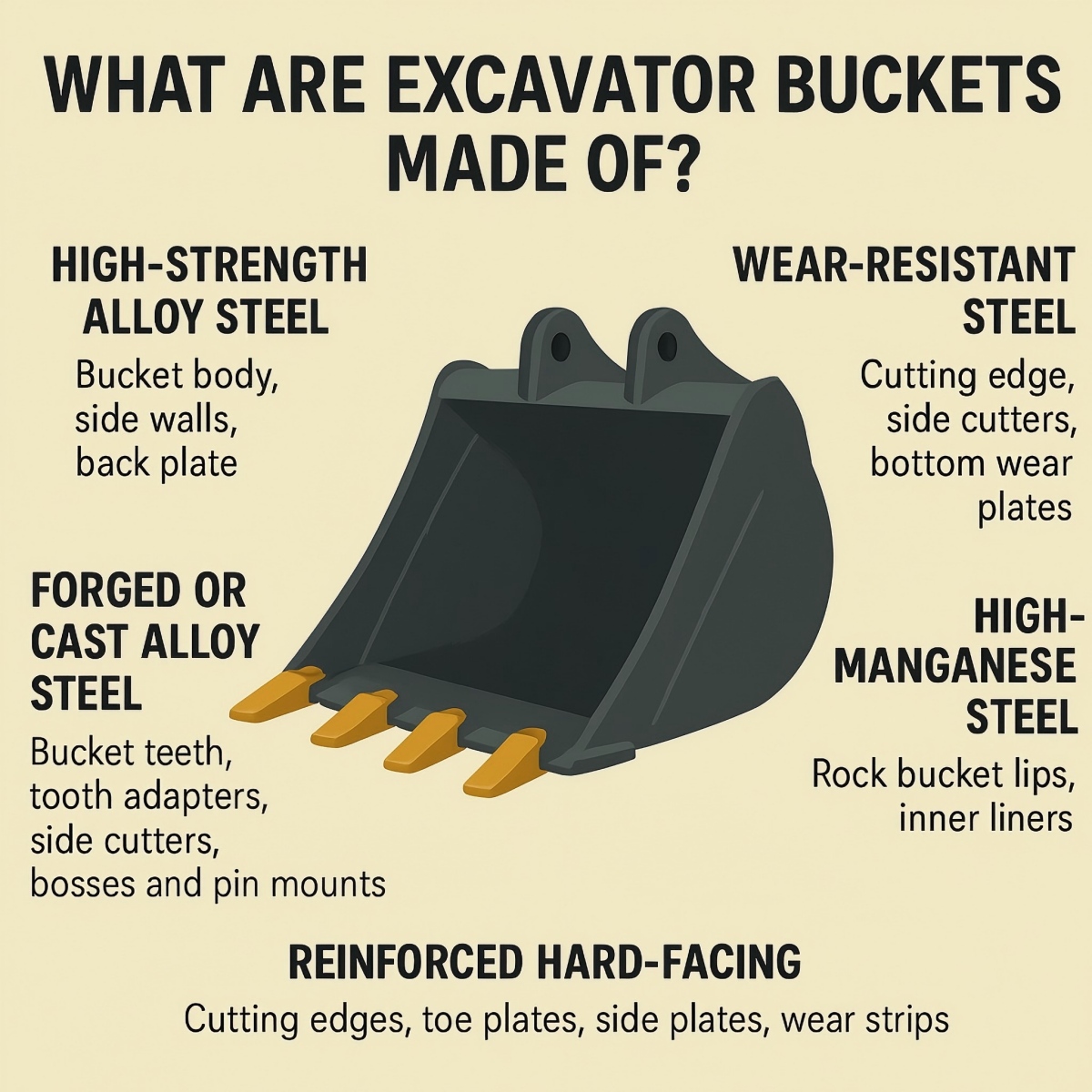
3.3 Bucket – Primary Digging Tool
Used for scooping earth, rocks, and debris.
Common Types:
General Purpose Bucket: For standard excavation tasks.
Rock Bucket: Reinforced for hard materials like stone.
Skeleton Bucket: Designed to separate rocks from fine soil.
4. Hydraulic Attachments – Expanding Versatility
Modern excavators can switch attachments to perform different tasks such as demolition, material handling, and drilling.
Hydraulic Breaker: Breaks concrete and rock.
Hydraulic Shear: Cuts steel structures, common in demolition.
Grapple: Handles waste, scrap metal, and wood.
Hydraulic Auger: Drills holes for piling work.
Quick Coupler: Allows fast attachment changes, increasing efficiency.
5. Swing System – 360° Rotation Capability
Includes Swing Motor and Swing Bearing to enable smooth rotation of the upper structure.
6. Electrical System – Smart Control Features
Modern excavators are equipped with GPS tracking, remote monitoring, and telematics systems (e.g., Caterpillar’s VisionLink) for real-time performance tracking and maintenance alerts.
Conclusion
Each component of an excavator plays a critical role, ensuring smooth operation and efficiency. If you need a detailed explanation of specific models or how to choose the right excavator for your needs, feel free to ask!
OEM vs. aftermarket excavator arms – Pros & Cons
Solution of spare parts for the construction machinery
Related Article